

Buying Off‑Plan Property In Brazil: A Guide For Foreign Buyers

Buying an apartment in Brazil “on the blueprint” can feel like unlocking a secret level: lower entry prices in a softer currency, glossy beachside renderings, and a sales team telling you you’re getting in before the crowd.
For many buyers, that story ends well: a finished unit, capital appreciation, and maybe even a path to residency. For others, it turns into delays, contract breaches, or in extreme cases, projects that are never delivered.
This guide looks at the whole journey of buying off-plan apartments in Brazil – from first brochure to delivery of the keys – and along the way it highlights where things typically go right, where they often go wrong, and what you can do at each step to reduce the chances of a nightmare down the road.
Looking at an off‑plan apartment in Brazil?
Our attorneys help you check the developer, paperwork, and delivery terms.
[email protected]
(214) 432-8100
+55-21-2018-1225
#1 Contact us for a free quote, or
#2 Schedule a consultation now.
1. The Dynamics of Off‑Plan Purchases In Brazil

Whether you call it off‑plan property, pre‑construction, a new development launch, a presale condo, a new build, or, in Portuguese, apartamento na planta, imóvel na planta, imóvel em construção, lançamento imobiliário, or even a “blueprint apartment” we’re essentially talking about the same thing: committing to buy a property in Brazil that is not ready yet and is still being built (or will be built) in the future.
1.1 How an off‑plan deal is supposed to work
When you buy “na planta” (off‑plan) in Brazil, you are usually entering into an incorporação imobiliária, governed mainly by Law 4.591/1964, the Consumer Code and Law 10.931/2004.
In a healthy scenario, the sequence is roughly this:
- The developer owns or controls the land.
- It approves the project with the city.
- It prepares a detailed “memorial de incorporação” with technical, legal and financial information.
- It registers this incorporation package at the Land Registry (Cartório de Registro de Imóveis). Only after this step can it legally sell units in that project.
That registration is not just bureaucratic. It is your first line of defense:
- It tells you the land really exists,
- that the project is approved,
- and that the company is at least trying to play inside the legal framework.
Yet, consumer authorities and courts still find many projects being marketed before this registration exists.
1.2 Patrimônio de Afetação: strong shield, but unfortunately not mandatory
After the spectacular collapse of Encol, Brazil’s largest developer in the 1990s, lawmakers realized that buyers needed more than good intentions. Encol’s bankruptcy in 1999 left an estimated 40–42 thousand families without their apartments and billions of reais in damage (more here)
In response, Law 10.931/2004 introduced the patrimônio de afetação regime. Under this mechanism:
- The land, construction and all cash flows of a specific project are separated from the general assets of the developer.
- That separate “box” typically only responds for debts related to the project itself and is protected from other creditors of the company (more here.)
In theory, if the company has problems in another city, your building does not sink with it. However, and this is the sad reality: Patrimônio de Afetação is optional in most cases.
The law does not automatically force every developer to adopt it. This optional nature has a predictable consequence. Because it is optional, adoption in practice is lower than ideal, which limits the real‑world impact of the protection (more here.)
When you are buying off‑plan, one of the most important questions therefore is not “Is there a nice model apartment?” but “Is this project under Patrimônio de Afetação?”
Planning to invest in a pre‑construction property in Brazil?
Talk to us before you send your first deposit.
[email protected]
(214) 432-8100
+55-21-2018-1225
#1 Contact us for a free quote, or
#2 Schedule a consultation now.
2. A Reality Shock so You Pay Attention to the Details and Never, Never Rush a Deal
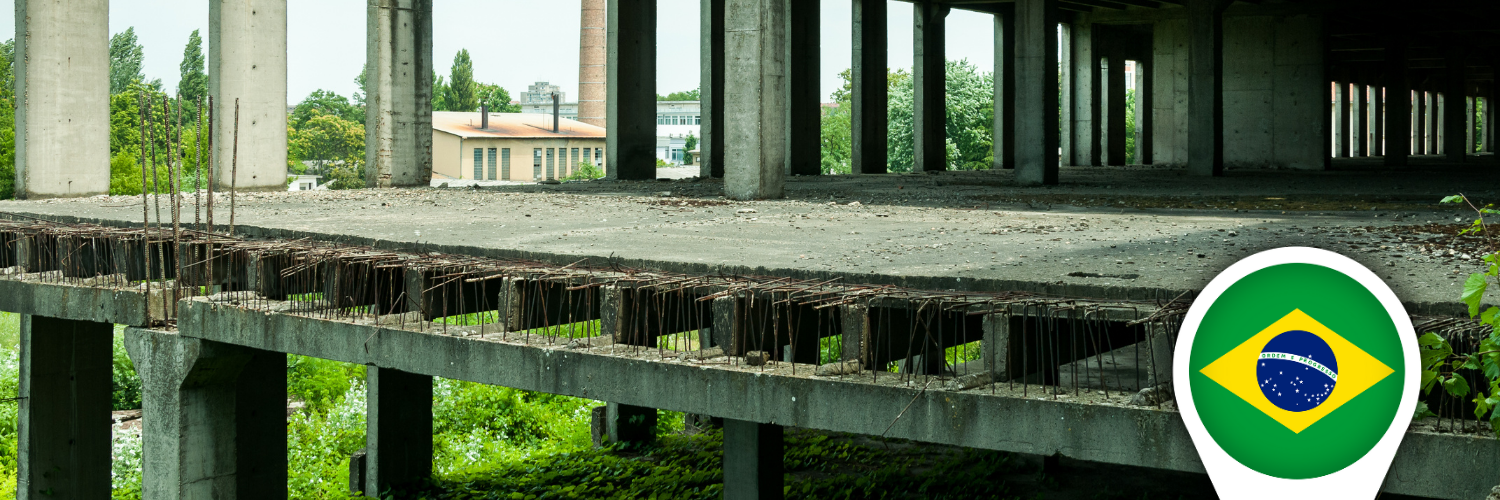
We start with the ugly side on purpose. Fraud and collapse in Brazilian real estate are not abstract “horror stories” that only happen to careless people – they show up in real court cases, news reports, and devastated families. You need to know that from the beginning so you keep your guard up, read the fine print, and refuse to be rushed into signing.
Once that message is clear, we’ll shift gears and walk you through how a proper, well-structured off-plan transaction in Brazil should work, step by step, so you can enjoy the opportunities without ignoring the risks.
That’s why off-plan property fraud in Brazil isn’t just a scary headline—before we walk you through the “right way” step-by-step, let’s ground this in a real case that still matters:
2.1 Encol: a big name does not mean failproof
Encol was once the largest construction company in Brazil. When it failed in 1999, it left tens of thousands of unfinished units spread around the country. Reports over the years have estimated roughly 40–42 thousand affected buyers and more than 20 thousand employees caught in the wreckage.
A 2025 feature in Exame revisits the case under the headline “Encol: a incorporadora que deixou 40 mil famílias sem casa nos anos 90” and shows how even decades later some buildings remain incomplete or were only finished by buyer associations.
Encol is important because it pushed the creation of Patrimônio de Afetação and still shapes how Brazilian regulators think about off‑plan risk.
- Exame: https://exame.com/mercado-imobiliario/encol-a-incorporadora-que-deixou-40-mil-familias-sem-casa-nos-anos-90/
- Jornal Opção: https://www.jornalopcao.com.br/ultimas-noticias/apos-23-anos-e-com-r-141-milhoes-em-caixa-encol-e-alvo-de-protestos-em-goias-e-sao-paulo-386034
2.2 Construtora Atlântica: selling the same apartment to several families
In Sao Paulo, Construtora Atlântica became a major example of direct fraud. According to Record/R7, the company’s owner was accused of a billion‑real scam, selling properties to hundreds of people, including selling the same apartment to more than one buyer, and failing to deliver the projects.
He was arrested abroad and deported to Brazil, with TV coverage literally describing him as “the owner of the construction company who sold the same property to several buyers.”
Again, it shows that even a big, visible developer can resort to desperate, criminal behavior when its cash dries up.
- R7 / Jornal da Record: https://record.r7.com/jornal-da-record/videos/dono-de-construtora-e-preso-acusado-de-vender-mesmo-imovel-para-varios-compradores-26052022/
2.3 Haut in Recife: Instagram luxury, concrete reality
Haut Incorporadora & Design, in Recife, branded itself as a creative luxury developer, with glossy images of bio‑philic towers and “civilizing” urban projects. Some of its buildings even appeared in design content from large brands in São Paulo.
Buyers saw a different story:
- Investigative outlet Marco Zero reported that Haut, already “broken”, was sold to another company for just R$ 200 thousand, despite having a declared capital of R$ 2.7 million and unfinished high‑end projects.
- Local media describes works abandoned in neighborhoods like Pina, with buildings turning into unsafe “white elephants” and buyers filing dozens of lawsuits to try to recover what they paid.
Haut’s collapse is particularly relevant for foreign readers, because this is precisely the type of company that can look irresistible in English‑language marketing: stylish, design‑driven, coastal, “up and coming”.
- Marco Zero Conteúdo: https://marcozero.org/haut-incorporadora-de-luxo-quebrada-foi-vendida-para-engenheiro-por-apenas-r-200-mil/
- Ricardo Antunes (local reporting): https://ricardoantunes.net/construtora-haut-prometia-luxo-mas-deixou-rastro-de-prejuizo-e-obras-paradas-no-recife/
2.4 Operation Black Flow in Itapema: 90 million reais and 168 buyers in one project
In 2025, the GAECO unit of the Santa Catarina Public Prosecutor’s Office launched Operation Black Flow in the beach town of Itapema.
According to the official press release, investigators believe a group of companies created dozens of special purpose vehicles (SPEs) to sell units in developments that either never left the ground or were delivered with serious irregularities. The scheme allegedly moved around R$ 90 million and harmed a large number of buyers, brokers and landowners.
One article on the case notes that in a single condominium, Coline Residencial, at least 168 families were identified as victims.
Among the patterns identified:
- Units sold before any proper incorporation was registered.
- Money deposited in SPE accounts being diverted to a holding company and then to personal expenses rather than construction.
- Ministério Público de Santa Catarina / GAECO: https://www.mpsc.mp.br/w/noticias/gaeco-deflagra-operacao-black-flow-contra-golpe-milionario-na-construcao-civil-em-itapema-
2.5 Toledo, Paraná: R$ 21–22 million in off‑plan contracts and half‑built towers
In the city of Toledo (Paraná), the Public Prosecutor filed an action against a developer group accused of applying one of the region’s largest real‑estate scams.
In 2024, the MPPR reported having identified 85 contracts of purchase and sale of off‑plan apartments, totaling around R$ 22 million, with works paralyzed while buyers were still being charged monthly as if construction were progressing normally.
Articles on the case emphasize that at least one of the towers lacked an approved architectural project or building permit, and that one plot of land was not even owned by the developer anymore, because the previous seller rescinded the deal due to non‑payment.
Again, this happened in a context of off‑plan purchases and “exciting” local growth narratives.
- Ministério Público do Paraná: https://mppr.mp.br/Noticia/Em-Toledo-Ministerio-Publico-obtem-decisao-liminar-contra-empreendedores-que-aplicaram
- Jornal do Oeste: https://www.jornaldooeste.com.br/promotoria-investiga-um-dos-maiores-golpes-imobiliarios-em-toledo/
2.6 Neoin and VR Brasil: “investments” with 2% per month and apartments as collateral
In late 2025, TV Globo’s Fantástico aired a segment on a scheme that promised 2% monthly returns, backed by apartments under construction that would supposedly be handed over if anything went wrong. Police estimate losses around R$ 200 million and more than 1,000 investors.
Real estate outlet ImobiReport and legal analyses identify the company Neoin at the center of this structure and mention a similar pattern with VR Brasil in Santa Catarina, both treated as suspected real‑estate based pyramids.
This is off‑plan fraud with a twist:
- Buyers are not just clients but “investors”.
- Marketing focuses on returns, not on living in the unit.
- When the music stops, they end up with neither the promised income nor a finished apartment that can be resold.
Ready to reserve a new‑build apartment in Brazil?
Let us make sure the deal and documents match what you’re being promised.
[email protected]
(214) 432-8100
+55-21-2018-1225
#1 Contact us for a free quote, or
#2 Schedule a consultation now.
3. The Dynamics of an Off-Plan Purchase in Brazil

3.1 Excitement, Pricing… and Not Letting FOMO Drive the Deal
If you are a foreign citizen, Brazil’s pre-construction market can look extremely attractive when things work as they should.
You see prices in reais that feel low when converted from dollars or euros, social media promising “Brazilian Golden Visa” opportunities, and renderings of beachfront projects that seem underpriced compared to your home country. At the sales stand, agents talk about pre-launch discounts, limited inventory and “this is the last unit at this price.”
In a well-run transaction, that initial excitement is followed by a calm, structured process: you receive full project information, your attorney reviews the contract and documentation, payment flows through traceable channels, and you sign only after your questions are answered.
Where things start going wrong is when FOMO takes over. The fear of “missing the wave” can push buyers to reserve units, wire deposits, or sign complex contracts before:
- documents are checked, or
- a Brazilian attorney has even seen the paperwork.
Because you’re wiring funds from abroad, often after investing in apostilles and sworn translations, your psychological cost of backing out becomes very high. Some developers and brokers (including well-intentioned ones) lean into this pressure by insisting you “must sign now or lose the unit.”
The healthy mindset is the opposite:
If a deal is truly solid, it will still be solid after your lawyer has reviewed everything.
Off-plan projects take years. Prices move in cycles. There is almost never a legitimate reason to rush a foreign buyer into signing a purchase and sale agreement before they have had time to review the documents and line up their paperwork with a licensed Brazilian attorney.
If part of your motivation is residency, you can also point readers to your Brazil Golden Visa resources, so they understand the immigration side calmly rather than through FOMO:
- Brazil Golden Visa overview: https://oliveiralawyers.com/services/real-estate/brazil-golden-visa/
- Brazil Golden Visa checklist: https://oliveiralawyers.com/services/real-estate/brazil-golden-visa/brazil-golden-visa-checklist/
- Normative Resolution 36 (real estate investor visa rules): https://oliveiralawyers.com/services/real-estate/brazil-golden-visa/real-estate-investment-normative-resolution-36/
3.2 Your Main Contact Is the Broker – And That’s Fine (If You Use the Contract Well)
In Brazil, off-plan sales are normally broker-driven. The standard structure looks like this:
- The developer hires one or more real estate agencies.
- Those agencies assign registered realtors (corretores) to stands and online sales.
- As a buyer, you mostly speak to these brokers, not to the developer’s executives.
This is not a flaw; it’s how the market is organized. A proper process looks like this:
- The broker presents the project and basic numbers.
- You receive a draft contract and key documents (incorporation, permits, etc.).
- Your lawyer checks everything and suggests adjustments.
- The developer issues a final version reflecting any agreed promises.
The danger is in the gap between what is said and what is written. Many of the most painful disputes arise because:
- promises about finishes, rental programs, concierge services, or visa support were made verbally or via WhatsApp,
- but never made it into the contract.
Legally, the developer is bound by the written and registered documents. In some situations, Brazilian courts can hold companies responsible for misleading advertising or broker behavior, but you really don’t want to rely on litigation to fix what a clear clause could have solved.
The safest rule of thumb is straightforward:
If it is not in the contract (or its official annexes), treat it as marketing, not as a right.
For a foreign buyer, this is even more important. Proving what was said in a WhatsApp voice message, in another language, to a broker you may never see again is complicated and expensive. It is far simpler to insist that any point that matters to you – delivery deadlines, penalties, finishes, furniture package, rental scheme, visa-related cooperation – appears in writing before you sign.
Here it’s a natural place to point readers to your “Do It Yourself or Hire a Lawyer” page, which explains why foreign buyers are usually better off with dedicated counsel:
https://oliveiralawyers.com/services/real-estate/acquisition/yourself-hire-lawyer/
And, for the broader real estate services overview:
https://oliveiralawyers.com/services/real-estate/
A good broker, working on a properly structured project, will help you push important points into the contract rather than telling you to “trust the conversation.”
3.3 Verifying That Your Broker Is Real (Even Inside a Fancy Stand)
In a normal, healthy scenario, every broker you deal with:
- has an active CRECI registration (the state real estate council), and
- is clearly connected to an authorized agency working for the developer.
Regional CRECI councils regularly supervise projects and sales stands to make sure this is the case.
At the same time, there are repeated warnings and enforcement actions against the “falso corretor” – the unlicensed or fake broker who appears at a stand, uses the project’s name, collects money “on behalf of” the developer, and then vanishes.
For foreign buyers, this risk is amplified by language and distance. It’s easy to assume that:
- a polo shirt with the project logo,
- a badge, or
- a nice stand on a busy avenue
… automatically means you are dealing with an official, supervised team. That is usually true, but not always.
In a proper transaction, you should be able to:
- ask each person for their CRECI number,
- confirm it on the relevant state CRECI website (for example, searching “Creci SP consulta inscrição” or “Creci RJ consulta corretor”), and
- see that the payments requested from you line up with the agency or developer named in your contract.
If someone wants you to send deposits from abroad directly to a personal account “because it’s faster” or “because the company account takes longer,” that is not how a professionally run sale operates.
A simple rule that holds both in good times and in bad:
Money for an off-plan unit should go only to the developer, its project SPE, or a clearly identified agency account linked in the contract – never to a random personal account for convenience.
3.4 Who Should Actually Receive Your Money? SPEs and Commissions
First, let’s clarify the SPE, the legal seller behind the brand; then we turn to commissions.
SPEs: the project company behind the brand
When everything is properly structured, the entity selling your unit is not the marketing brand, but typically a Sociedade de Propósito Específico (SPE) – a special-purpose company created just for that project.
That SPE will usually:
- hold title to the land,
- sign the promise of purchase and sale with you,
- receive your instalments, and
- often be the entity linked to bank financing or Patrimônio de Afetação.
So it is completely normal to see:
- “Sunset Towers Empreendimentos SPE Ltda.” in the contract, and
- “Sunset Towers by BigBrazil” in the ads.
What matters is consistency, not branding. In a proper transaction:
- the SPE exists and is active in the Brazilian company registry (valid CNPJ),
- it appears in the land registry as owner or incorporator for the project, and
- the bank account receiving your payments is in that SPE’s name (or in another clearly identified, related entity expressly mentioned in the contract).
Because this involves reading Portuguese records and matching corporate data, the safest move for a foreign buyer is to have a Brazilian real estate attorney do a final coherence check between:
- the SPE named in your contract,
- the information in the land registry, and
- the account receiving your funds.
Real estate commissions: when the buyer pays the brokers directly
In many standard transactions, the developer/SPE receives the full price and later pays the real estate agency and brokers their commission out of that amount.
Some developers, however, structure sales so that part of your first instalment is paid directly to the real estate agency or brokers as commission. This is not the rule, but it happens and can be legitimate if it’s transparent and properly documented.
If the transaction is being handled correctly:
- the main purchase & sale contract with the developer/SPE is signed first (or at the same time),
- the contract or an addendum clearly states that a specific amount will be paid directly to the agency as commission for that particular unit, and
If a broker asks you to pay commission before signing the main contract with the correct developer/SPE, or refuses to have that arrangement reflected in writing, treat it as a serious warning sign.
To stack the odds in your favor, especially as a foreign buyer, it is wise to let a Brazilian real estate attorney confirm that:
- the developer/SPE is legitimate,
- the agency is officially linked to the project, and
- any direct commission payments you make are fully documented as part of the price of your specific unit.
Excited about a new development in Brazil?
Get an independent legal view on the project before you rush in.
[email protected]
(214) 432-8100
+55-21-2018-1225
#1 Contact us for a free quote, or
#2 Schedule a consultation now.
4. Law and Reality

On paper, Brazil has a sophisticated legal framework for off-plan projects. When everyone follows the rules, you have a clear structure: the project is properly registered, money flows through the right channels, buyers are protected in case of delay, and both sides know what happens if someone wants to cancel.
In real life, the same rules can be applied very well, poorly, or creatively. This section explains how the system is supposed to work, and where foreign buyers need to pay extra attention and bring in professional help.
4.1 Patrimônio de Afetação
In an ideal world, every serious off-plan project in Brazil would be placed under Patrimônio de Afetação. Under this regime, the land, construction and buyers’ payments for one specific project are put in a kind of “separate box”. However, Patrimônio de Afetação is optional. The developer chooses whether to adopt it for each project. In practice, that means:
- Some well-run companies use it consistently.
- Others do not use it at all, or only for certain projects.
How it should work in your transaction:
- Your lawyer checks the land registry (matrícula) and confirms whether the project is formally under Patrimônio de Afetação.
- If it is, that is a meaningful plus for the project’s risk profile.
- If it is not, your lawyer can at least help you understand what that means in terms of exposure and what other protections (contractual, bank oversight, developer track record) are in place.
4.2 Incorporation Registration: Your First Structural Check
Under Law 4.591/64, the developer is supposed to register the incorporation (Memorial de Incorporação) in the local Land Registry before selling off-plan units. The Memorial sets out:
- The land,
- The project description,
- The unit mix and area,
- The developer or SPE responsible, and
- Other technical and legal details.
In a transaction that follows the rules:
- The Memorial de Incorporação is duly registered.
- The project’s marketing materials match what appears in that registration.
- Your contract refers to that same registration and land registry entry.
That’s the baseline your attorney wants to see when doing due diligence.
In reality, some projects have been launched or even heavily marketed before the incorporation is formally registered, or with incomplete municipal permits. Cases in places like Toledo (Paraná) and Itapema (Santa Catarina) show buyers paying significant amounts into projects that never had their legal foundations fully in place.
Your practical takeaway:
- In a proper process, your lawyer confirms that the Memorial de Incorporação exists, is registered, and matches what you are being offered.
- If the developer says it is “almost ready” but not yet registered, the safest move is to wait until it is done and visible on the matrícula, or to walk away.
If problems are discovered only later (for example, incorporation never registered or registered with a different company than the one selling to you), that’s when buyers move from the transaction side of the house to the litigation side:
-
- Developer Breach in Brazil – Paid in Full, No Delivery or No Deed: https://oliveiralawyers.com/services/real-estate/brazil-real-estate-litigation/developer-breach/
4.3 Delivery Deadlines and the Cost of “Double Housing”
In a well-designed contract, the delivery of your unit should be:
- Clearly dated (e.g., “30 months from the start of works”), plus
- A tolerance period, typically up to 180 days, which is widely accepted in the market.
After that, the expectation is:
- Either the developer delivers on time,
- Or, if they need more time, they compensate you in line with the law and the contract (for example, paying an amount equivalent to rent for the delayed period).
Brazil’s consumer authorities and courts, including the Superior Court of Justice (STJ), have repeatedly held that:
- When the developer delays beyond the contractual (plus tolerance) period, the buyer can usually claim loss of use (lucros cessantes), often calculated based on the market rent for a comparable unit, until the keys are actually handed over.
That is how the protection is supposed to work. In practice:
- Some developers push deadlines to the limit, relying on buyers’ patience.
- Others delay compensation or resist paying anything until they are brought to court.
- Foreign buyers, in particular, can spend one, two or more years paying both rent in their home country or in Brazil and instalments/financing on a unit they cannot yet occupy or rent out.
If you ever reach that point, you are no longer in the “healthy transaction” stage; you are in a dispute. That’s precisely where dedicated real estate litigation counsel becomes crucial to quantify the delay, calculate damages, and negotiate or sue for fair compensation:
-
- Brazil Real Estate Litigation: https://oliveiralawyers.com/services/real-estate/brazil-real-estate-litigation/
- Developer Breach in Brazil – Paid in Full, No Delivery or No Deed: https://oliveiralawyers.com/services/real-estate/brazil-real-estate-litigation/developer-breach/
The preventative side is choosing a developer with a good track record and making sure your contract, from the beginning, contains clear deadlines and financial consequences for delay, reviewed by your lawyer.
4.4 The Lei do Distrato: Exit Rules When the Relationship Breaks
Sometimes it is not about fraud or delay; it’s about life changing. Income shifts, visa plans evolve, or you simply no longer want that unit. For these situations, Brazil introduced Law 13.786/2018, known as the Lei do Distrato, to clarify cancellation rules for off-plan contracts.
In a properly drafted, post-2018 contract, you should see:
- Clear information (usually in a “quadro-resumo”) about how much can be retained by the developer if you cancel, and
- Under what conditions you are entitled to a refund, and in what timeframe.
For contracts signed after the law:
- If the buyer cancels without fault by the developer, the company may usually retain up to 25% of what was paid, and up to 50% in projects under Patrimônio de Afetação, with the remainder refunded over time as the law and the contract specify.
- If the developer is at fault (for example, serious delay, failure to build as promised, or other material breaches), jurisprudence tends to be more favorable to the buyer, and the retention percentage becomes a central point of dispute.
Modern contracts may be drafted very close to the maximum retention allowed by law, especially in affected projects, which makes backing out expensive even when you start feeling uncomfortable early on. A buyer who signs such a contract without understanding it may discover later that a “simple cancellation” is financially painful.
How it should work in your favor:
- Before you sign, your lawyer explains in clear English how the distrato clause works, which percentages can be retained, and what counts as your fault vs developer fault.
- If the retention or refund terms are too harsh, your lawyer can attempt to negotiate more balanced language, or at least help you factor that risk into your decision.
For foreign readers, the key takeaway is that developers typically cannot simply keep all your money just because you cannot complete the full payment flow.
Seeing a tempting “lançamento imobiliário” in Brazil?
Let us review the launch documents and developer before you sign anything.
[email protected]
(214) 432-8100
+55-21-2018-1225
#1 Contact us for a free quote, or
#2 Schedule a consultation now.
5. Foreign-Specific Steps & Requirements

Up to now, most of what we covered applies to Brazilians and foreigners alike. From here, we focus on the extra layers that show up when you are sending money from abroad, using foreign documents, and sometimes aiming for a Brazil real estate investor visa.
Throughout this section, keep one idea in mind: none of this is meant to scare you away. This is how a well-structured off-plan purchase for a foreign buyer should work. When you see shortcuts or “creative” workarounds, that is usually where the trouble starts.
5.1 Payment from abroad and currency-exchange documentation
In a proper transaction, payments from abroad go through a Brazilian bank or authorized foreign-exchange institution, never through informal routes, so-called payment apps, or personal accounts.
Each transfer should generate a foreign-exchange contract or bank declaration (for example, a “contrato de câmbio” or a bank letter) showing that:
- the money left your foreign account,
- entered Brazil as foreign capital, and
- was applied to a specific property purchase.
These documents are crucial for:
- keeping your own records clean,
- explaining the origin of funds for tax and banking purposes, and
- supporting a Brazil real estate investor visa application when that is part of your plan.
In a well-structured off-plan deal where the visa is part of the goal, the contract should:
- state that payments will be done via formal foreign-exchange operations,
- obligate the developer to provide you with copies of all bank FX documents listing you as the investor, and
- include a clause that the developer will cooperate with consulates and immigration authorities when proof of investment is requested.
If those elements are missing, you risk ending up in a strange situation: fully paid, but without “immigration-grade” evidence that you invested the R$ 1,000,000 (or R$ 700,000 in the North/Northeast) required under RN 36, depending on where the property is located.
That’s one of the reasons it is so valuable to have a firm that handles both the real estate purchase and the Golden Visa strategy in one plan.
5.2 Documentation: apostille, sworn translation and RTD
One of the biggest “traps” for foreign buyers is that developers usually don’t demand perfect documentation to sign the purchase agreement.
They want the sale. You want the unit. Everyone is happy to sign.
But legally, that signed purchase agreement is only a promise. In Brazil, you do not become the legal owner of the property when you sign the promise of purchase and sale. You only acquire real estate rights when the public deed is executed and registered at the Land Registry (Cartório de Registro de Imóveis) way down the road. Until then, you are essentially holding a contractual right, not a property right.
That is where documentation suddenly becomes very real.
To be effective in Brazil for closing and ownership, most key foreign documents must go through three layers:
- Apostille or consular legalization in the country of origin.
- Sworn translation into Portuguese by a Brazilian tradutor juramentado.
- Registration at the RTD (Registro de Títulos e Documentos).
For a foreign real estate buyer, this typically involves:
- birth and marriage certificates,
- divorce decrees and marital property agreements,
- powers of attorney granted abroad so your lawyer can sign on your behalf in Brazil.
Here is the key practical point:
- To sign the purchase agreement, many developers will accept scans, simple translations, or even just passport details.
- To attend closing and actually become the owner, notaries and registries will require the full formalities: apostille, sworn translations, and, where relevant, RTD registration.
If you don’t plan ahead, you may happily sign the contract today, but months or years later, when the property is finally ready to be conveyed, you discover you cannot close because your documents are not in Brazilian legal shape. At that stage you may face contractual penalties, extra costs, or tight deadlines that are hard to meet from abroad.
Because this usually involves two or more countries, coordination is not trivial. That is why it fits naturally into a broader cross‑border legal plan, instead of being left to the last minute:
-
- Cross-Border: https://oliveiralawyers.com/services/cross-border/
In short: developers will often let you sign with light paperwork, but Brazil will only let you own with proper paperwork.
5.3 Marital status, divorce and who appears on the deed
From a legal‑design perspective, a proper transaction makes your marital situation clear and coherent in both countries. Brazilian law doesn’t treat your marital status as a personal detail; it treats it as a key element of who really owns the property.
Brazil’s default rule is that assets acquired during marriage generally belong to both spouses under a partial community property regime, unless another regime has been chosen and properly registered. So banks, notaries and registries will quite reasonably ask:
- are you single, married, divorced, widowed, or in a civil union?
- what is your marital property regime or, for foreigners, typically mention the law of the country where you reside and have both spouses in the title as co-owner spouses.
Here is where the cultural/legal mismatch begins.
Brazilian notaries and registries are used to a world where couples choose a regime (partial community, full community, separation of assets, etc.) and record that choice in a notarial deed. They often assume other countries work the same way. In reality, many jurisdictions don’t offer “regimes” as options. Instead, local state or national law defines what happens to marital property automatically, without the couple ever signing a specific marital contract.
If you’re a foreign buyer, that difference matters for one simple reason:
In Brazil, the way your marriage works on paper can decide who goes on the property title and who must sign future sale documents.
If you are currently married abroad, Brazilian notaries and registries will typically:
- require your spouse to appear on the title when the purchase is completed, and
- require your spouse to sign future deeds when you want to sell or gift the property.
In other words, even if you negotiated and paid for the property alone, Brazil may still treat it as a jointly held marital asset for registration purposes. It makes sense for notaries and registries to take a more conservative approach and have both spouses on the title. How could they possibly learn or confirm how assets are treated when your marriage occurred abroad?
For marriages and divorces that involve a Brazilian citizen, Brazil goes further:
- Foreign marriages are required to be registered in Brazil to produce full effects in the Brazilian system (and, no, you are not single just because you haven’t completed your registration).
- Foreign divorces must usually be homologated (recognized) by a Brazilian court to be fully effective.
For marriages between two non‑Brazilians, registration in Brazil is not mandatory. However, it can still be strategically useful to legally convey to notaries and registries which marital property rules should apply (for example, the law of a particular US state or European country).
This leads to two very practical recommendations for foreign buyers:
- Be careful about buying while “in the middle” of a foreign divorce.
Your current spouse may still end up on the title or be required to sign future sale documents, simply because Brazil still sees you as married. - If you have past marriages or divorces involving Brazil or Brazilians, regularize them first.
Again, this is not “optional” or just “advisable”. It is an obligation for any and all Brazilians.
Don’t lie. Period.
In Brazil, your civil status is not a small detail the system ignores. It is a legally relevant fact that shows up in almost every serious document: real‑estate deeds, powers of attorney, marriage registrations, immigration files, inheritance proceedings, and more.
Because of that, lying about your civil status in Brazilian documents is not just “bending the truth” – it can be a crime.
The crime behind “I’ll just say I’m single”
Under Brazilian criminal law, misrepresenting your civil status in a document can amount to falsidade ideológica (ideological falsehood), set out in Article 299 of the Brazilian Penal Code.
Article 299 punishes anyone who:
omits, in a public or private document, a declaration that should appear in it, or inserts or causes the insertion of false information, with the purpose of prejudicing a right, creating an obligation, or altering the truth about a legally relevant fact.”
Civil status – whether you are single, married, divorced, widowed, in a civil union – is precisely the kind of “legally relevant fact” the law has in mind. It affects property rights, inheritance, family obligations and even immigration.
Brazil’s own consular services are very explicit about this. For example, the Ministry of Foreign Affairs warns that a Brazilian married abroad who declares being single in Brazil incurs the crime of falsidade ideológica and, if they marry again, can also be prosecuted for bigamy.
Legal articles and commentary take the same line: declaring yourself single in Brazil after marrying abroad is treated as falsidade ideológica under art. 299, and entering a new marriage without being properly divorced can trigger art. 235 (bigamy) of the Penal Code.
So when someone signs a Brazilian document as “single” while they are in fact married or divorced, they are not just “simplifying” things. They are potentially:
- omitting a fact that must appear in that document, and
- altering the truth about a legally relevant situation,
For foreigners, the same logic applies:
If you appear before a Brazilian notary or registry and consciously misstate your status (for example, calling yourself “single” when you are married under the law of your home country), you are inserting a false statement in a public document in Brazilian territory. That fits the pattern of falsidade ideológica; the only question is whether prosecutors see enough interest to pursue it.
5.4 Real estate investor visa: what off-plan buyers must know
When everything is structured correctly, an off-plan purchase can be not only a financial investment but also your gateway to residency in Brazil.
The real estate investor visa is governed by Normative Resolution 36/2018 (RN 36). In broad strokes, it allows a residence authorization for foreign nationals who invest:
- at least R$ 1,000,000 in urban property, or
- R$ 700,000 in the North and Northeast,
with some flexibility to combine more than one property to reach these amounts.
Your Golden Visa hub page and checklist walk readers through the core concepts and typical documentation:
-
- Brazil Golden Visa: https://oliveiralawyers.com/services/real-estate/brazil-golden-visa/
- Brazil Golden Visa Checklist: https://oliveiralawyers.com/services/real-estate/brazil-golden-visa/brazil-golden-visa-checklist/
For properties under construction, RN 36 and real-world practice expect the applicant to present, at minimum:
- a promise of purchase and sale contract duly registered at the Land Registry,
- a signed bank FX contract or declaration proving the international transfer of funds, in line with the required thresholds,
- the building permit (Alvará de Construção), and
- the Memorial de Incorporação registered.
From a design point of view, an off-plan deal that is “visa-ready” should look like this:
- the project has all the basic registrations and permits in place;
- the contract and payment structure are carefully aligned with RN 36 rules;
- the developer explicitly commits to providing documents and cooperating with the visa process; and
- your legal team is thinking about immigration compliance at the same time as real estate due diligence.
If, instead, you buy into a “creative” project with unregistered incorporation, unclear building permits, informal payment flows, and vague promises about future documentation, the risk is double:
- higher exposure as a property buyer, and
- a very real chance that, even if the building is eventually completed, it will not qualify for the investor visa because the investment evidence does not meet immigration standards.
If you zoom out, the picture is actually reassuring:
Brazil does not make it impossible for foreign buyers; it just asks you to play by Brazilian rules. When your payment, documentation, family status and visa goals are all aligned from the start, an off-plan purchase can be a powerful, well-protected way to enter the Brazilian market and, if you wish, Brazilian residency.
Thinking about an apartamento na planta in Brazil?
We can analyze the developer, the incorporation, and the cancellation clauses for you.
[email protected]
(214) 432-8100
+55-21-2018-1225
#1 Contact us for a free quote, or
#2 Schedule a consultation now.
6. The Human Level: When Off-Plan Changes Lives For Better… Or Worse

Off-plan projects are not just spreadsheets and contracts. They land right in the middle of people’s lives.
When everything goes well, an off-plan purchase can be transformational in a positive way:
- A family moves from renting to owning a brand-new apartment, planned from day one with their needs in mind.
- A long-term investor locks in a good entry price and sees the property appreciate even before delivery.
- A foreign buyer combines a lifestyle upgrade with a residency strategy, using the investment to support a Brazil visa and a gradual move into the country.
That is the best-case scenario, and it happens every day with serious developers and properly reviewed contracts.
But the same structure that can work beautifully can also cause real damage when there is fraud, mismanagement, or serious delay. In the worst cases, buyers report:
- Selling their primary home to fund the down payment on a “dream” apartment, then spending years in temporary rentals while paying instalments on a unit that never arrives.
- Family stress as children grow up in an uncertain housing situation and parents feel guilty for having believed promises that never made it into the contract.
- Emotional exhaustion from dealing with lawyers, courts, and constant uncertainty about whether they will ever receive the property or a fair refund.
For foreign buyers, the emotional and financial stakes are even higher. Problems can also mean:
- Visa plans falling apart because the property cannot be used to support a real-estate residency application.
- Currency risk, especially when you paid in a strong currency and the asset is denominated in reais and illiquid until completion.
- The cost and complexity of litigating in a foreign country and language, often from thousands of miles away.
So, when we talk about “fraud,” “delay,” or “non-compliance,” we are not just naming legal concepts. We are talking about outcomes that can either build a life in Brazil or derail it. The whole point of understanding the law, the process, and the red flags is to maximize your chances of ending in the first group – the people who are picking up keys and planning house-warming dinners – and not the second.
Already bought an apartamento em construção in Brazil and feeling uneasy about delivery?
Our team can evaluate your rights and options.
[email protected]
(214) 432-8100
+55-21-2018-1225
#1 Contact us for a free quote, or
#2 Schedule a consultation now.
7. Practical Protection For Off‑Plan Buyers In Brazil

Most people will naturally want to move from diagnosis to protection. While this article is not enough to bring you enough protection to enter into a transaction without a licensed Brazilian attorney on your side, these are some of the steps that may reduce the risk.
7.1 Verify the project in the Land Registry
Before falling in love with renderings, send someone to the Cartório de Registro de Imóveis with the land’s basic data (address or information from marketing materials) and request:
- A certidão da matrícula of the land, and
- Confirmation that a “registro de incorporação” exists for the project you are being offered.
No incorporation registration, no deal.
If you are more conservative, also verify whether the incorporation is under Patrimônio de Afetação, checking for a specific annotation referencing Law 4.591 and Law 10.931.
7.2 Check the developer’s track record, not their Instagram
Google is your friend, but Brazilian judicial sites and serious news outlets are your best friend. Search for:
- The developer’s name together with “falência”, “recuperação judicial”, “ação civil pública”, “Procon”, “Creci”, “Reclame Aqui”.
- News stories in respected outlets, similar to the way you could find Encol on Exame or Atlântica on R7.
If the company appears in association with large‑scale fraud investigations, this guide can safely tell you to walk away.
7.3 Treat brokers and realtors as sales professionals, not as your “trusted adviser”
Important for buyers to understand that:
- Brokers and realtors are usually paid a commission tied to closing, not to you achieving the best risk profile.
- Many are honest and hardworking, but the structure of incentives is sales‑oriented.
- There are documented cases of fake brokers acting illegally, even at sales stands, and CRECI constantly warns about them.
Minimum homework for off-plan buyers may include:
- Verify the broker’s CRECI registration on the regional council’s website.
- Refuse to send any money to personal accounts.
- View every oral promise as something that must migrate into the written contract if it really matters.
“Do it yourself or hire a lawyer” for real‑estate purchases? Read more here.
7.4 Insist that all critical promises appear in the contract
If the broker or realtor promises:
- A furniture package,
- A minimum guaranteed rent,
- A specific view that could be blocked by future phases,
- Visa support, exchange documentation, or anything else that changes your risk,
then that promise should be:
- Written into the purchase and sale agreement or an annex, and
- Drafted in a way that can be enforced and quantified if not delivered.
7.5 Align property purchase with your marital and immigration planning
Treat real‑estate and personal status as a single strategy:
- If you are married, verify which marital property regime applies and how it interacts with Brazilian law.
- If you are separated or divorcing abroad, consult a lawyer about whether the divorce should be recognized in Brazil first, to avoid surprises at the deed stage.
- If you intend to apply for a Brazil real‑estate investor visa, make sure from day one that the property, payment method and documentation are compatible with RN 36.
Want to use an investment property under construction in Brazil for income or a visa?
We align the deal with your return and immigration goals.
[email protected]
(214) 432-8100
+55-21-2018-1225
#1 Contact us for a free quote, or
#2 Schedule a consultation now.
8. Consumer Checklist For Off‑Plan Buyers In Brazil

To help you slow things down and ask better questions from day one, we created a free eBook: “Off-Plan Property in Brazil – 14 Essential Checks for Foreign Buyers.” It’s a short, practical guide that walks you through the key checks you can run before you sign anything or wire a single real, in the same clear, no-nonsense style you see on this page.
Off-Plan Properties eBook
The eBook doesn’t turn you into a Brazilian lawyer (and it’s not meant to), but it gives you a solid first triage: spotting obvious red flags in glossy “launch” brochures, understanding which documents actually matter, and arriving at conversations with brokers, developers, and banks with your questions already lined up.
Whether you’re thinking about a beach place for personal use, a pre-construction investment, or a unit that might support a Brazil real estate investor visa, it’s designed to move you from “I have no idea where to start” to “I know the 14 checks I should never skip.”
Use it as your pre–due diligence companion: read it, mark what applies to you, and then, when something feels off or too good to be true, that’s your cue to stop and get professional help instead of pushing ahead on hope alone.
Important: This eBook is educational only and does not replace advice from a licensed Brazilian realtor or attorney. It will help you ask smarter questions, but your actual decisions should be made with proper legal guidance – preferably before you sign or pay for anything.
Frequently Asked Questions

1. What does “apartment na planta” or “pre‑construction condo” in Brazil actually mean?
It means you’re buying a unit that is not ready yet. You sign a promise of purchase and sale for an apartment that exists on paper, in the architectural plans and in the registered Memorial de Incorporação, but not yet as a finished home. You typically pay in instalments during construction and only become the legal owner when a public deed is executed and registered in the Land Registry after the building is ready for conveyance.
2. How does buying a pre‑construction property in Brazil normally work from start to finish?
In a typical “na planta” deal, you reserve a unit, sign a promise of purchase and sale with the project’s SPE (special‑purpose company), pay a down payment and instalments during the works, and then, once construction is completed and the project has its occupancy certificate, you go to a notary to sign the public deed and register it at the Cartório de Registro de Imóveis. Only after that registration do you hold real property rights; everything before that is a contractual promise.
3. Is buying an off‑plan apartment in Brazil safe?
It can be, if the project is legally structured and you do your homework. The law gives good tools: mandatory incorporation registration, consumer protection rules, and, in many cases, mechanisms to compensate buyers for serious delay or breach. Risk rises when developers sell units before registering the incorporation, skip proper permits, avoid Patrimônio de Afetação, or push aggressive cancellation terms. Safety is less about the label “off‑plan” and more about the specific developer, documentation, and contract you are dealing with.
4. Why would I buy a “na planta” unit instead of a ready apartment?
Off‑plan and pre‑construction units usually offer lower entry prices, flexible payment plans, and potential appreciationd
uring construction. You can sometimes choose finishes, layouts, or parking options that suit you better. The trade‑off is time and uncertainty: you wait for years, accept construction risk, and need to be comfortable with the developer’s track record and the contract’s protections. For some buyers, especially long‑term investors or families planning a move, that trade‑off is worth it; for others, a ready unit is psychologically and financially easier.
5. What are the main risks of buying an apartment “on the blueprint”?
The big risks are non‑delivery, excessive delay, and quality deviation. A project can be delayed by financing issues, poor management, or municipal problems; in extreme cases, works stall or the company goes into judicial recovery. Even when delivered, the unit may differ from marketing promises. For foreign buyers, add FX risk, visa plans that depend on the property, and the cost of litigating abroad. These risks don’t mean you shouldn’t buy, but they mean you should treat due diligence and contract review as part of the purchase price.
6. How long do pre‑construction projects normally take in Brazil?
Most residential “lançamentos imobiliários” advertise delivery between 24 and 48 monthsfrom the start of works, with many contracts including a 180‑day tolerance clause. In practice, some developers deliver earlier, many are roughly on time, and a minority slide into long delays. As a foreign buyer, assume the real horizon is at the long endof what’s promised, and base your housing or visa plans on conservative timing, not on the best‑case sales pitch.
7. What is the Memorial de Incorporação and why should I care?
The Memorial de Incorporaçãois the core legal document that registers the project at the Land Registry. It links the land, the SPE, the plans, and the unit mix, and is a legal condition to sell units off‑plan. If a pre‑construction condo is being marketed without a registered Memorial, you are effectively funding a project that has not yet been formally born in the registry. A serious off‑plan purchase starts by confirming that this incorporation is registered and matches what is being sold.
8. What is Patrimônio de Afetação in a Brazilian “imóvel na planta”?
Patrimônio de Afetação is a regime where the land, the building, and the cash flows of one development are ring‑fencedfrom the developer’s other activities. When a project is under this regime, problems in another city or project are less likely to drag your building down with them. It is optional, not automatic, so many projects don’t use it. For you, it is a strong plus when present, but its absence doesn’t automatically mean fraud; it simply means your lawyer should scrutinize the developer’s finances and structure more carefully.
9. How do I know if a Brazilian new development has Patrimônio de Afetação?
You don’t find this in the brochure; you find it in the matrícula(land registry entry). A lawyer or notary can request a recent certidão da matrícula and look for a specific annotation instituting Patrimônio de Afetação for that project. If the project has it, great: register the date and terms. If not, you evaluate whether other protections (solid bank financing, strong brand, conservative payment structure) compensate for the higher structural risk.
10. What is an SPE and why does it appear in my contract instead of the developer’s brand name?
An SPE, or Sociedade de Propósito Específico, is a special‑purpose company created just for that development. It typically holds the land, signs the promise of purchase and sale, and receives your payments. It’s normal for your contract to mention “Sunrise Towers Empreendimentos SPE Ltda.” while the ads say “Sunrise Towers by BigBrazil.” What matters is that the SPE exists, is active, appears in the land registry as the incorporator or owner, and matches the bank account receiving your money. A consistency check between brand, SPE, registry, and bank is a must.
11. How are payments typically structured for a condo “na planta”?
Most Brazilian pre‑construction deals use a blend of down payment, monthly instalments during construction, and a larger balloonat keys or after. Sometimes the developer offers in‑house financing; sometimes a bank takes over at delivery. As a foreign buyer, you should map clearly what is paid in local currency from a Brazilian account, what will come via international transfer, and whether any of those amounts will be used to pay broker commissions separately. The more you understand the cash flow, the less likely you are to be surprised by a big lump sum at the end.
12. How do I pay for an off‑plan unit from abroad the right way?
The safe route is to use a Brazilian bank or authorized FX housethat issues an exchange contract or bank declaration showing you as the sender, the amount in foreign currency, and the destination as the specific property. Those documents support tax compliance and, if relevant, a real estate–based investor visa. You should avoid informal transfers or sending money directly to personal accounts, even if a broker insists it’s “just a reservation.” Payments should match the entity in your contract and be traceable on paper.
13. Can I finance a pre‑construction apartment in Brazil as a foreigner?
Yes, but options and conditions depend heavily on the bank and on whether you’re resident in Brazil. Many foreigners finance the construction phase directly with the developerthrough instalments, then seek a loan in their countries of origin to pay off the property at delivery. Some banks lend to non‑residents, but this is typically an uphill battle. If finance is crucial, you should treat bank pre‑approval as part of your due diligence, not as an afterthought.
14. When do I become the legal owner of a new build apartment?
You do notbecome an owner when you sign the promise of purchase and sale. You become an owner when a public deed(or, in some states, a registered private instrument) is executed in your favor and registered at the Cartório de Registro de Imóveis. Until then, you hold contractual rights, not real rights. Developers often allow you to sign the contract with minimal paperwork, but the registry will demand proper documents and formalities at closing; this is why planning your documentation early is critical.
15. What happens if my “apartment under construction” is delivered late?
If a developer misses the contractual deadline plus any tolerance, they are generally in default. Brazilian case law often allows buyers to claim compensation for loss of use, commonly calculated similar to market rent, from the end of the tolerance period until keys are delivered. You can usually choose between keeping the contract and asking for damagesor rescinding and fighting for a refund with corrections. The best strategy depends on how advanced the project is, the developer’s situation, and whether you still want the unit at all.
16. What is a reasonable delivery tolerance for a condo “na planta”?
A grace period of up to 180 daysis common in Brazilian off‑plan contracts and has been accepted by many courts if it is clearly written and not abused. Anything significantly beyond that, especially with weak justification or vague communication, starts to look like unjustified delay. As a buyer, you shouldn’t panic the day after the tolerance ends, but you should treat this as a trigger point to get legal advice, quantify your losses, and decide whether to keep pushing for delivery or discuss rescission.
17. If the project stalls or the developer doesn’t deliver at all, what can I do?
Your options are usually to sue for specific performance(force completion and delivery if still realistic) or for rescission with refund plus damages. The right path depends on whether the project is salvageable and on the developer’s financial and legal condition. In some large failures, buyers band together in collective actions; in others, individual suits work better. Either way, documentation is king: contracts, payment proof, marketing material, photos of the site, and registry records all feed into a stronger claim.
18. What is “distrato” and how does cancelling a pre‑construction contract work?
“Distrato” is the termination or cancellationof your purchase contract. If you cancel without developer fault, Brazilian law often allows the company to retain part of what you paid and return the rest, ideally promptly. If the developer is at fault (serious delay, major breach), courts are more favorable to full or near‑full refund. Modern contracts are drafted under the Lei do Distrato, which sets retention caps and refund rules, and older contracts are governed by prior case law. The key is to understand which regime applies to you before you sign any cancellation proposal.
19. How much can a developer keep if I cancel my “imóvel na planta”?
For newer contracts under the Lei do Distrato, many developers set retention near the legal maximums: up to about 25%of what you paid in many cases, and more in affected projects. Courts, however, have curbed extremely high retentions as abusive and often push toward more reasonable percentages, especially when you’re a consumer and the contract is highly one‑sided. If the developer is clearly at fault, buyers may be entitled to full refund, plus corrections. Never accept a “standard” retention without understanding what the law and recent court decisions say in your scenario.
20. What if I only paid a deposit or “reservation fee” for a pre‑sale unit?
Even with just a deposit, you still have rights. Whether it is refundable depends on what was written, what conditions were attached, and who failed to fulfill their part. If the developer never registered the incorporation, never obtained key permits, or changed the deal substantially, it’s hard for them to justify keeping your entire sinal. Treat any “100% non‑refundable” claim with caution and have a lawyer check the proposal; in many cases, you can negotiate or litigate a significant partial refund.
21. Who should I pay first: the developer or the realtor?
In an ideal world, you pay the developer or SPE, and they pay the broker. In practice, some structures make the buyer pay part of the commission directly to the agency out of the first instalment. That can be legitimate if it’s transparent and clearly tied to your unit in the contract. What you should never do is pay large amounts to a personal accountor pay commission before you have a signed, reviewed purchase agreement with the correct developer/SPE. If in doubt, have your lawyer confirm who is being paid, why, and how it will be credited to your purchase.
22. Is it normal in Brazil to pay commission directly to realtors in a “na planta” deal?
It happens, but it’s not the only model. Some developers prefer the buyer to pay everything to the SPE and then settle commissions internally; others structure the deal so the buyer pays a defined amount straight to the agency. If you are asked to pay commission separately, make sure this is clearly described in the contract, the payment goes to the agency’s corporate account, and the developer recognizes this amount as part of the transaction for that unit. If a broker wants commission before the main contract is signed, that’s a big yellow flag.
23. How do I avoid fake brokers when buying a “new launch” development?
Ask for each broker’s CRECI numberand check it on the state CRECI website. Real brokers won’t hesitate. Confirm that the sales stand or showroom is officially connected to the developer or a known agency, and that all payment instructions you receive match those entities. Be allergic to personal accounts, improvised receipts, or pressure to “pay now, paperwork later.” And remember: a nice stand and logoed polo shirt don’t guarantee the person in front of you is actually authorized.
24. Are WhatsApp promises about finishes, views or rental income enforceable?
WhatsApp messages can be used as evidence, but they’re a weak substitutefor proper contract clauses. Brazilian law does allow buyers to claim based on misleading advertising and sales promises, but doing so later means litigation, translation, expert evidence and delay. It’s far better to take every critical promise – finishes, delivery date, penalties, rental programs, visa support – and push to have it written into the contract or annexesbefore you sign. Think of WhatsApp as a reminder, not as your main legal protection.
25. Why does everyone insist “if it’s not in the contract, it doesn’t exist”?
Because in real estate disputes, courts and registries work off documents, not stories. When push comes to shove, judges and notaries look at signed contracts, registered instruments, annexes and official certificates. Verbal assurances and informal chats are hard to prove and easy to deny. That’s why good brokers and good lawyers insist on converting every material promise into contract language; they know that’s what will be enforceable if something goes wrong.
26. Which documents should I see before committing to a pre‑construction condo?
At minimum, you want to see evidence that the land exists and belongs to the right entity, that the Memorial de Incorporação is registered, and that key permits (like the construction license) are in place or at least well advanced. For foreign buyers eyeing a Golden Visa, add the building permit, FX documents, and a contract registered at the Land Registry. You don’t need to personally decode each document, but you want a lawyer to confirm that what you’re buying on paper truly exists in the public records.
27. What personal documents do I need as a foreigner to buy an “apartment na planta”?
You’ll need a CPF(Brazilian tax ID), a valid passport, and, depending on your marital status, properly prepared civil documents such as marriage or divorce certificates and any marital property agreements. In most Brazilian states, the cartorios will demand a birth certificate for buyers who are single. For closing and registration, those foreign documents normally require apostille or legalization, sworn translation into Portuguese, and sometimes RTD registrationin Brazil. Developers may let you sign the purchase contract with minimal documentation, but the notary and registry will require the full package before putting the property in your name.
28. Do I need a CPF to buy a pre‑construction unit in Brazil?
Yes. The CPFis required in virtually all property transactions, whether the unit is ready or under construction, and whether you are Brazilian or foreign. You can obtain a CPF through a Brazilian consulate abroad or directly in Brazil, often with assistance from your lawyer. You’ll need it not only to sign the deed but also to handle taxes, bank relations, and, in many cases, FX operations related to the purchase.
29. Do I have to be physically in Brazil to buy or close on a “na planta” property?
You can handle much of the process remotely. Many foreign buyers sign the promise of purchase and sale electronically and then grant a power of attorneyto a trusted lawyer or representative in Brazil to sign the public deed when the time comes. That power of attorney must be notarized in your country, apostilled or legalized, and sworn translated and, often, registered in Brazil. The more you want to avoid trips, the more important it is to set up that POA properly from the start. E-Notariado may also be used for remote closings although the supervision of an attorney is recommended.
30. How does my marital status affect a pre‑construction purchase in Brazil?
Brazil cares a lot about how your marriage affects property ownership. Under its default regime, assets acquired during marriage are often shared, and notaries and registries assume some form of joint interest unless proven otherwise. If you’re married abroad, Brazil may require your current spouse to appear on the title and to sign future sale documents, depending on the applicable law. If you’re divorced, but that divorce hasn’t been properly recognized in Brazil (where a Brazilian was involved), the system may still treat you as married. Misstating your status is not a “shortcut”; it can create criminal and civil problems. The safe path is to tell the truth and let a lawyer align your documentation with Brazilian expectations.
31. What if I’m in the middle of a divorce abroad and want to buy a pre‑construction apartment?
That’s a high‑risk moment to buy. If you’re still legally married, Brazil may see the property as part of the marital estate and may require your current spouse on the title or at least their signature to sell later. If there’s a Brazilian involved, the foreign divorce will usually need to be formally homologatedin Brazil before local authorities fully treat you as divorced. It’s often wiser to resolve the divorce and its recognition first, then purchase, unless your lawyer designs a structure that clearly separates the investment.
32. Can I just say I’m “single” in my deed even though I’m married or divorced abroad?
No. Misrepresenting your civil status in Brazilian documents can be treated as falsidade ideológica(a criminal offense), and in some situations involving second marriages even as bigamy. It also undermines the security of the deed and can cause serious issues if a spouse or ex‑spouse later contests the transaction. If your situation is complex, the solution is not to lie but to regularizeyour status in Brazil (for example, by registering the marriage or homologating the divorce) and then structure the purchase accordingly.
33. Can I buy a pre‑construction unit through a company instead of in my own name?
Yes, many investors use Brazilian or foreign companies to hold real estate, but this adds layers: tax planning, CNPJ or foreign‑company registration, and sometimes stricter KYC with banks and registries. For visa purposes, you must check whether investments through entities still count as your personal investment under the current Golden Visa rules. If your motive is asset protection, anonymity, or succession planning, involve both a real estate lawyer and a tax/structuring professional so you don’t trade simplicity for hidden complexity.
34. Can buying a “new development” apartment help me get a Brazil Golden Visa?
It can, if the investment meets value, documentation, and structure requirements. The real estate–based investor visa usually requires a minimum investment amount (with lower thresholds in some regions), proof that funds entered Brazil correctly, and, for off‑plan properties, a registered promise of purchase and sale plus incorporation and permit documents. If Golden Visa is part of your plan, you should choose the property and payment method with the visa rules in mind from day one and make the developer’s cooperation on documentation part of your negotiations.
35. Do I need a lawyer if I already have a good realtor?
Realtors and lawyers play different roles. Brokers are paid to close the sale; their focus is on finding you a property and persuading both sides to agree. A lawyer is paid to protect your position, detect legal and structural problems, and negotiate better terms or tell you to walk away. In the “na planta” context, where everything depends on paper and timing, a real estate lawyer is less a luxury and more a form of insurance, especially if you’re not fluent in Portuguese or familiar with Brazilian law.
36. Do I still need a realtor if I hire a lawyer?
For most buyers, yes. A realtor helps you find projects, access launches, and understand local market dynamics; a lawyer ensures those opportunities are properly documented and safe. In some cases, especially when you’re buying in a project you already know directly from the developer, your lawyer can work without a broker. But in general, the ideal team is developer/SPE + broker + lawyer, each doing their own job, with you firmly in the center.
37. Can I buy a pre‑construction condo 100% safely without traveling to Brazil?
You can handle the legal and registry side remotely if you prepare well: obtain a CPF, set up a properly legalized and translated power of attorney, and work with a lawyer who can physically visit registries, stands, and notaries as needed. What you can’t do is skip due diligence just because you’re far away. The more remote you are, the more you need eyes and brains on the groundmaking sure the project, the contract, and the timing match what you’re expecting.
38. How does currency risk affect buying an “apartment under construction” in Brazil?
You’re often paying in a strong currency (USD, EUR, GBP) for an asset denominated in reais, over several years. If the real weakens, your foreign‑currency cost can fall; if it strengthens, later instalments become more expensive. On top of that, some contracts index prices to inflation indices. The practical takeaway is to understand your total exposure in both currenciesand avoid over‑committing based on today’s FX rate. Some buyers hedge by keeping part of their investment capital already in reais or by choosing payment structures that match their income profile.
39. Are rental‑guarantee or “Airbnb ready” promises in new launches reliable?
Rental programs in condo‑hotels, studios and “Airbnb friendly” developments can work, but they add another layer of business risk on top of construction risk. You need to see how the guarantee is structured, who is on the hook, for how long, and under what conditions it can be changed or terminated. It’s easy for brokers to throw around yield percentages that quietly assume 100% occupancy and no expenses. Treat guaranteed‑income offers as you would any investment product: read the contract, stress‑test the assumptions, and have a lawyer translate the small print into plain language.
40. Can I resell my “imóvel na planta” contract before the building is finished?
Many contracts allow assignment or resale of rights, sometimes with developer consent or a fee. In hot markets, some investors flip contracts before delivery; in cooler markets, this can be difficult or only possible at a discount. Before assuming you can exit easily, check what your contract says about assignment, whether the developer can block or charge for it, and what local market conditions look like. Treat resale flexibility as a bonus, not as your main safety net.
41. How do Brazilian courts treat foreign buyers in off‑plan disputes?
Brazilian courts generally apply the same consumer and civil protectionsto foreign and Brazilian buyers when the purchase is personal rather than corporate. They don’t punish you for being foreign, but distance, language, and time zones can make litigation harder on you than on a local. That’s why choosing the right forum, organizing documentation, and having lawyers who are used to dealing with foreign clients makes a big difference. The law is not your enemy; disorganization is.
42. What are some red flags that should make me walk away from a pre‑construction deal?
Universal red flags include: no registered incorporation, insistence on substantial payments to personal accounts, refusal to show basic documents, pressure to sign the same day, a pattern of negative press or lawsuits about the developer, and contracts with obviously abusive clauses that “cannot be changed.” If two or three of these stack up, the problem is not that you’re overly cautious; it’s that you’re being given a preview of how the relationship will look if anything ever goes wrong.
43. What are some signs that a pre‑construction project is being handled professionally?
Positive signs include a registered Memorial de Incorporação, transparent documentation, a clear and realistic schedule, conservative marketing promises, willingness to let your lawyer review and negotiate contract terms, a well‑known bank financing the project, and a developer with a solid track record of delivered buildings in the same region. No single sign guarantees perfection, but a cluster of good signals, plus a clean contract and registry check, suggests you are dealing with grown‑ups.
44. What are “normal” vs abusive clauses in a “na planta” contract?
Normal clauses are things like a delivery tolerance period, reasonable late‑payment penalties, and clear indexation of instalments. Abusive patterns include open‑ended delivery deadlines, very high penalties only for the buyer, huge retentions on cancellation, one‑sided arbitration choices, and vague language that lets the developer change key features without your consent. The line between normal and abusive is drawn by Brazilian consumer protection rules and case law, so having a local lawyer read your “standard” contract is your best way to know which side you’re on.
45. What’s the single most important thing to do before paying anything for a “new launch” apartment?
Make sure someone who represents you, not the developer, has looked at the project’s legal skeleton and the contract. That means confirming the land registry data, the incorporation registration, the developer’s background, and the actual obligations and penalties in the promise of purchase and sale. Everything else – the view, the renders, the pool, the rental plan – is optional. A proper legal and registry check before the first payment is the difference between a calculated risk and a blind leap.
46. Do I really need to worry about fraud if I’m buying from a big brand developer?
Bigger names tend to have more to lose and often better compliance, but they are not immune to financial stress or to aggressive contract drafting. You may be less likely to face outright fraud, but you can still face serious delays, rigid cancellation policies, or quality disputes. The same basic checklist applies: check incorporation, understand Patrimônio de Afetação, read the contract, and plan your documentation. Brand reduces some risks, but it doesn’t replace legal analysis.
47. How does Brazilian law protect me if the unit is delivered with serious construction defects?
You have rights under both the Civil Code and the Consumer Defense Code to demand repair, reduction in price, or, in extreme cases, rescissionwhen serious defects are proven. Developers are responsible for structural issues for years after delivery and for hidden defects that show up later. To use those rights effectively, you’ll need technical evidence (engineers, reports, photos) and a legal strategy that either pushes the developer to resolve the problem or secures compensation through court.
48. Can a pre‑construction purchase be structured to support my estate planning?
Yes. You can plan how Brazilian property will pass to heirs, use certain corporate structures, or coordinate Brazilian rules with your home country’s inheritance law. But Brazilian succession law has its own mandatory‑heir concepts and restrictions. If your off‑plan investment is significant, it’s worth combining real estate advice with private client / estate planningguidance so that your unit in Rio or Florianópolis behaves like a well‑integrated part of your global estate, not like a stubborn outlier.
49. If I take only one thing from this entire FAQ about Brazilian pre‑construction, what should it be?
Treat a “na planta” purchase as a legal and financial project first, and an emotional project second. If you verify the project in the registry, understand the contract, align your documentation, and have a professional on your side, you radically improve your odds of ending up in the group that posts key‑hand‑over photos, not in the group swapping court updates. The law in Brazil gives you tools; your job is to use them before you sign, not after things go wrong.