The appeal
Sailing, green hills, beaches and a smaller community can become part of the ordinary routine.

A green island, sailing boats and a coastal home can make a compelling life. Start with your priorities, compare the everyday routines and plan the mainland connection as part of the move.
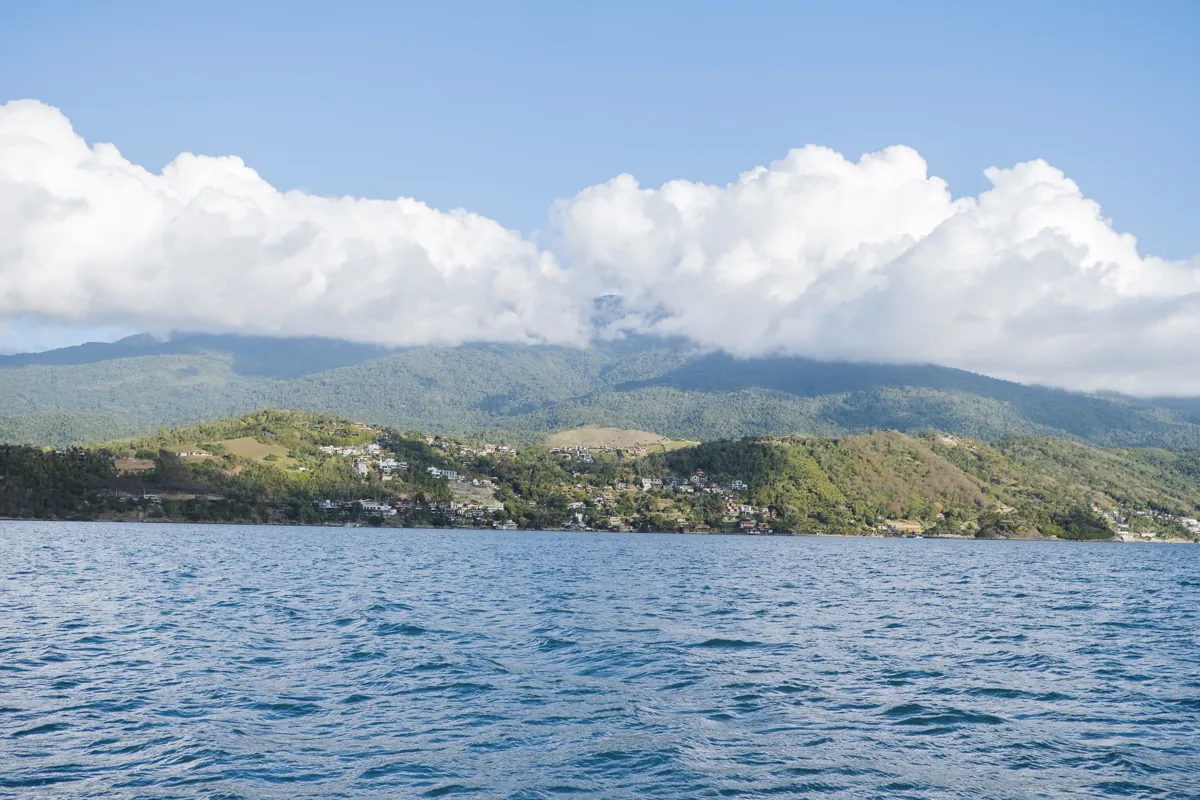
Your priorities come first.
Healthcare, safety, connections to home, the way you spend your days. Start with what matters to you; the budget can follow.Choose a home around the life you want to repeat.
Sailing, green hills, beaches and a smaller community can become part of the ordinary routine.
Perequê’s errands, the Vila’s evenings and a southern beach house produce different daily journeys.
Plan care, remote work and mainland trips around the actual address and ferry, rather than a holiday impression.
01 / START WITH YOUR PRIORITIES
Choose what matters to you, or try a starting profile.
No personal details or budget are needed to begin.
These planning flags stay separate from your weighted score. They identify the confirmations your household needs; they do not exclude cities or confirm eligibility.
No health history or personal details needed. An unresolved requirement remains visible in your city result and saved brief.
YOUR PRIORITIES IN CONTEXT
One clear fit score, with its evidence explained.
Explore Ilhabela and two contrasting alternatives.
ILHABELA · YOUR SELECTED PRIORITIES
Method 3.2: Your priorities weight seven dimensions. Climate gradually matches normal monthly temperature and rainfall to the starting preferences or your refinements. Affordability compares city costs until you enter your own monthly limit. Previous saved briefs retain their earlier method and assumptions.
An original assessment by Oliveira Lawyers. We combine multiple public-data families with your priorities and our editorial interpretation. Documented resident accounts add context where reviewed. This is a discovery tool, not an official rating or personal risk forecast.
Safety context combines the 2021 IBGE municipal neighbourhood-safety survey (80%) with consistent 2025 police-recorded intentional homicide plus feminicide victim rates (20%). It is not an armed-robbery grade. The full guide treats local robbery and theft evidence separately.
Flood and slope context stays separate from the climate score. Healthcare and services describe provision, not a guarantee about an appointment or address. Housing references describe the supplier’s covered listings; food, household allowances and local tariffs have their own identified dates and limitations. The detailed guide explains what each measure can and cannot tell you.
Read the approach, scope and required credits →02 / CONSIDER THE MONTHLY COSTS
An optional planning tool, when you are ready.
No forms to complete until you choose to begin.
Choose your household, rental area and spending style for a rough monthly estimate. If you want more precision, replace any monthly cost with your own figure. Choose US or international units inside the calculator.
Use our estimate as a starting point, or replace any component with your expected monthly amount. Clear a field to return it to the estimate; enter 0 when that cost does not apply. Custom amounts stay fixed when your household or style changes.
If water is included in condominium charges, set Water and sewer to 0. Replace bus and other transport together to avoid counting the same journeys twice.
Each extra adult or child increases the relevant food, service, transport and personal allowances. Home size also grows unless you enter your own size.
Child food uses an editorial 65% adult-equivalent factor plus extra grocery allowances. This is a rough spending assumption, not a child nutrition standard. Children also receive clothing, travel, care and schooling provisions appropriate to the chosen style.
Health cover, schooling, property charges and lifestyle costs are selected planning allowances, not provider quotes. Practical assumes a public-school pathway with no private tuition; other styles carry a private-school/childcare reserve. Ages, availability and individual needs can change those amounts substantially. The Luxury rental factor models more generous spending; it does not price a specific luxury property.
Keep one-off setup costs separate from the normal month. Enter actual quotes or deliberate zeros; blank stays unknown. These fields do not change the monthly fit grade.
TAKE THE DECISION WITH YOU
Save your priorities, two alternatives, neighborhood shortlist, budget assumptions and unresolved questions in a readable brief. No account or email needed; it stays on this device until you choose to download or print it.
A coastal home, an ordinary working week and a practical mainland connection.
Ilhabela is best understood as a working island community whose extraordinary landscape sits beside very ordinary decisions about homes, care, transport and money. This guide brings those decisions together for English-speaking people considering a move from the United States, Canada, the United Kingdom, Australia or Europe.
Start with the routine you want, compare the regional starting points and use the household example when it helps. For the legal side of establishing yourself, explore our Brazil property services alongside the practical guide.
Ilhabela rewards people who want the water and the forest to shape their ordinary week. Sailing boats in Saco da Capela, an early walk beside the channel, a familiar café in the Vila and a beach afternoon can become repeatable pleasures. It is a small municipality with a working commercial centre, not simply a collection of resorts. The 2022 Census counted 34,934 residents; the 2025 estimate is 36,559. That scale brings a different set of services and social opportunities from a large Brazilian capital.
Compared with Florianópolis, the obvious difference is access: Ilhabela has a ferry rather than road bridges. Compared with São Paulo, it trades the capital’s immense hospital, employment and cultural choice for a much smaller coastal routine. A loose American lifestyle comparison is Martha’s Vineyard: boating, second homes and seasonal arrivals all help explain the appeal. The climate, Brazilian institutions and mainland journeys are very different; this is an analogy about the shape of life, not a claim that the places are interchangeable.
The happiest match is likely to have flexible mainland appointments, a realistic care plan and an interest in Portuguese. People who fly frequently, need immediate access to a particular specialist or depend on uninterrupted home-office service should evaluate those requirements early. The island’s beauty is easy to appreciate on a visit. The real test is whether a normal Tuesday works.
Perequê’s errands, the Vila’s evenings and a southern beach house are different propositions. The urban coast runs largely along the channel-facing side of the main island. Mountains and protected forest limit the alternatives to the principal north–south road; a short straight-line distance across a map can hide a much longer actual journey. The ferry arrives at Barra Velha, not in the historic Vila.
Start with the five regional groups below. They organise the search, rather than declaring official neighbourhood boundaries. Open the profiles that interest you and use the connected map to explore real places: a hospital, a beach, a cultural building or a named road. A beach point does not identify a private entrance or certify the homes around it.
| Area and group | Everyday setting | Tradeoff and household fit |
|---|---|---|
| Perequê The everyday services coast | Perequê is the strongest first test for everyday convenience. The commercial circuit and channel-side beach put regular errands into a recognisable area, rather than making every purchase a special island journey. It is not the historic Vila and it is not the ferry terminal itself. Walk the actual route between the home, supermarket and pharmacy; a property labelled Perequê can still sit inland on a slope. Compare evening noise, crossings, parking and the ability to return comfortably with shopping. The beach is a useful part of the setting, with swimming conditions checked on the current CETESB map rather than assumed from its appearance. | Busy roads and the last stretch to the home can change the walking experience. Who might investigate: A practical first base for an ordinary island week. |
| Barra Velha The everyday services coast | Barra Velha puts the arrival and care journey into the home search. The municipal Mário Covas Júnior hospital is here, and the ferry-side area is the beginning of many mainland trips. This can matter more to a household with regular appointments than living beside its favourite holiday beach. Compare the actual road approach, bus connection, noise and wet-weather walk, rather than interpreting “near the ferry” as a promise of immediate boarding. The UNIVESP support pole is another local reference. A lower-priced home still needs the same inspection of ventilation, drainage and the terms of a genuine residential lease. | Ferry traffic and a working transport environment differ from a resort frontage. Who might investigate: People who value the mainland connection and a straightforward services plan. |
| Água Branca The everyday services coast | Água Branca makes the inland-home alternative concrete. One identified two-bedroom townhouse in the household example is advertised here, with the published fixed charges included in its package. The named Faria Lima avenue is an orientation for exploring this inland corridor, not a private gate or the boundary of every listing labelled Água Branca. Test the home’s own access in rain, internet service and practical trip to Perequê. Extra space can be valuable, but it does not automatically make a home easy to walk from. An attractive lower monthly ask should be evaluated alongside its minimum rental term, condition and daily transport needs. | Gradients, drainage and the final road approach vary considerably. Who might investigate: Households comparing a residential townhouse with a tourist-coast apartment. |
| Vila — historic centre The Vila and sailing waterfront | The Vila offers a centre you can enjoy repeatedly, not just a sightseeing stop. Begin at the Antiga Cadeia e Fórum and explore the surrounding historic streets, church, waterfront and cafés. The municipality describes the nautical museum in this building; check current opening arrangements before a specific visit. The ferry is farther south at Barra Velha, so a pleasant dinner circuit does not eliminate the mainland journey. AP0130, a two-bedroom monthly apartment example, illustrates a different rental package from the inland townhouse. Compare bedroom noise, steps, parking and the actual route to groceries as carefully as the centre’s charm. | Visitor arrivals, events and parking can change a quiet-looking block. Who might investigate: People who want a recognisable centre for evenings and cultural stops. |
| Saco da Capela and Engenho d’Água The Vila and sailing waterfront | This coast gives Ilhabela much of its memorable sailing atmosphere. Saco da Capela lies south of the Vila, not beyond it to the north. Engenho d’Água adds its historic farm setting and surrounding residential streets; the cultural site is a useful place to begin understanding the area. Compare a shore-front apartment and an uphill house as different everyday commitments. Memberships, moorings and boat-storage arrangements require separate enquiries. Check the evening return, road noise and the trip to the regular shopping circuit. A quieter residential stretch can be appealing without being equivalent to the compact streets of the historic centre. | A marina view does not include a berth, and services remain location-specific. Who might investigate: People drawn to sailing, a waterfront walk and proximity to the Vila. |
| Siriúba, Viana and Armação The northern coast | Explore the northern coast as a sequence, not a single luxury label. Siriúba and Viana are closer to the Vila than Armação; an attractive northern address can therefore mean quite different travel commitments. Armação’s actual beach is the map reference for the farther part of this group. Visit the property’s own driveway and route in rain, and try the journey to your regular supermarket and hospital. A home with a sea view may introduce steps, a garden and a vehicle dependence you would not infer from the photograph. Choose this coast because you enjoy its specific routine, rather than expecting every northern home to offer identical privacy or access. | Central shopping, healthcare and the ferry require more planned journeys. Who might investigate: People comfortable trading some convenience for this particular coast. |
| Feiticeira and Julião The southern beach sequence | Feiticeira and Julião suit a more deliberately beach-centred week. They are north of Curral, despite some commercial guides grouping them as if they lay beyond it. A cove can feel wonderfully separate from the central circuit, but the trip for groceries and appointments still belongs in the decision. Use Julião’s beach reference to explore the surroundings; it is not a promise of step-free private access from an advertised house. Compare the last approach, parking, building maintenance and the evening return. A trial should include a wet day and a shopping trip as well as the sunny afternoon that first attracted you. | Parking, steps and the actual walk to the sand vary by property. Who might investigate: Households wanting these beaches while retaining a manageable urban connection. |
| Curral and Veloso The southern beach sequence | Curral has a lively visitor-facing beach proposition; it is not a guarantee of secluded living. Nearby Veloso introduces another coastal setting, and individual houses differ in elevation, access and proximity to activity. A home that works beautifully for a week’s holiday may need a different maintenance and transport budget for permanent occupation. Try the main-road journey during a busy period and organise the return from an evening out. Compare the actual yearly residential lease with a seasonal package before treating a displayed monthly figure as a household cost. The better choice is the address whose ordinary routine suits you, not automatically the one closest to a famous beach. | Seasonal movement and the longer central-services journey affect the week. Who might investigate: People who value this southern coast enough to plan around its travel needs. |
| Bonete Beyond the ordinary road circuit | Bonete is a community to understand respectfully, not an empty coastal backdrop. Boat or trail access puts it outside the everyday car-and-bus circuit described for Perequê or the Vila. Weather and sea conditions can alter a planned boat return, while the trail demands an appropriate assessment of fitness, conditions and local guidance. Stay long enough to understand food supplies, communications, power, healthcare and waste arrangements before imagining permanent occupation. A beach marker is landscape orientation, not a private landing instruction. Cultural respect, actual rights over a proposed property and environmental rules matter as much as the extraordinary scenery. | Boat or trail access, sea conditions and limited services change the logistics. Who might investigate: People deliberately testing a remote-community lifestyle rather than a standard island commute. |
For a first residential trial, compare a central-services base with the coast you find most attractive. Include groceries, evening transport, the actual hospital approach and a wet-weather return home. A quieter view may be worth an extra drive; it is most valuable when you know what that drive entails.
The recorded serious-harm picture is relatively low, but the small population matters. SINESP records one intentional-homicide victim and no separately recorded feminicide victims for Ilhabela in 2025. With the 2025 population estimate, that is about 2.7 victims per 100,000 residents, compared with 5.5 for São Paulo state and 15.5 nationally in the common comparison. One additional victim would noticeably change the island’s rate. These figures describe recorded lethal harm, not armed robbery, opportunistic theft or your personal risk.
The common City Fit safety calculation also needs a consistent comfort measure. Ilhabela has no equivalent municipal result in the common IBGE series, so it uses the disclosed São Paulo state neighbourhood-comfort proxy: 71.7% felt safe or very safe in 2021. That state figure is not an Ilhabela resident poll. It should not be read as a verdict on walking after dinner in the Vila or leaving a home unattended during a trip.
The useful address-level questions are straightforward: secure entry, a manageable return route, lighting and parking, the visibility of the front door and arrangements when the property is empty. Tourist beaches, busy commercial streets and isolated trailheads are different settings. Ferry dependence changes logistics; it does not create a protective barrier that makes crime impossible.
Ilhabela has a real local hospital, but specialist planning extends beyond the island. The Hospital Municipal Governador Mário Covas Júnior is in Barra Velha and serves SUS patients. Its municipal service description includes emergency care, maternity and hospital services. This is the current hospital; a listing that shows an old Santa Casa address in the Vila is not a reliable care plan.
On the mainland, the Hospital Regional do Litoral Norte Francine Maia França is in Caraguatatuba and offers more complex regional care. It is also a SUS institution, with regulated referral access; it is not a private walk-in alternative simply because its specialty list is longer. A regular mainland appointment brings a road trip and ferry into your week.
| 2023 municipal resource indicator | Ilhabela | São Paulo state | Brazil |
|---|---|---|---|
| Doctors by workload, per 1,000 residents | 2.36 | 3.49 | 2.76 |
| Primary-care coverage | 100.0% | 69.8% | 82.8% |
| Avoidable-cause deaths per100,000, age-adjusted (Census standard) | 73.0 | 94.5 | 92.1 |
The compatible IEPS figures use the same year and definitions; the mortality indicator is lower-is-better. Historical non-SUS beds were zero in this municipal dataset, which does not mean there was no public hospital. These are resources and outcomes, not a waiting-time or English-language-service rating.
For private cover, obtain an actual provider-network and age-specific quote through Camila Saunier’s health-insurance service for foreign citizens or your chosen broker. Match your existing conditions, medicines and specialist needs to a named facility, including the mainland journey. Do not assume an international policy automatically provides cashless access everywhere.
Convenience here comes from choosing a compact routine. Perequê contains much of the ordinary shopping and services circuit; Barra Velha is the ferry-side arrival and hospital area. The Vila offers a different mix of history, restaurants and an attractive waterfront. Living near one does not put you beside all three. The south-coast beach sequence and the northern residential coast extend the travel decision rather than forming a circular road around the island.
In the 2022 Census, 81.4% of the island’s workers who travelled to a workplace reported a usual journey of half an hour or less; 2.1% reported more than an hour. This is a dated worker-commute measure, not a promise about driving from Curral to a ferry on a holiday. It also does not describe people who work at home.
The coastal cycleway can make selected central journeys pleasant, while the last road to a hillside home may be steep, narrow or poorly suited to a casual shopping walk. A bicycle, a car and a bus each solve different parts of the island. Try the actual route with groceries and at the hours you would use it. For an older household, steps at the gate and a sloping return can matter more than the distance shown on a property advertisement.
A short crossing and a short journey are not the same thing. São Sebastião is on the mainland; there is no bridge to replace this vehicle-ferry route. The state service describes a sailing time of roughly 17 minutes, but arrival queues, boarding, unloading, weather and the road at either end add to the trip. Reserve substantial flexibility around flights and important appointments rather than adding a fixed crossing time to a map estimate.
The state’s ordinary published fare for a car is $4 (R$19) on weekdays and $6 (R$29) on weekends and holidays. It is collected in the São Sebastião-to-Ilhabela direction and includes the return; do not double it automatically. Pedestrians and cyclists use the ordinary crossing free. The separate Hora Marcada reservation has different prices and conditions. Check the state crossing information for operations and current rules.
The municipal environmental entry charge is another item, separate from the ferry. The published TPA for an ordinary outside-registered car is $10 (R$48) per entry; vehicles registered in Ilhabela or São Sebastião have an automatic exemption under the municipal notice. Other exemptions require the actual rules and documentation. A local resident’s circumstances and a visitor’s rental car are not automatically treated alike.
The bus can support an ordinary island routine, provided your route and return work. On 30 October 2026 the registered-card fare is $1 (R$5) and the ordinary cash fare is $2 (R$10). A municipal notice dated 19 October announces a change from 1 November 2026: $0 (R$3) with the registered card or digital wallet and $1 (R$5) in cash or Pix. The calculator’s dated starting figure uses the current card fare; replace it with the fare you actually pay.
The same notice treats Aquabus separately: $4 (R$20) integral fare or $1 (R$5) with the Fênix card. This passenger-boat service links selected channel-side stops, not every beach or hillside street. Read the municipal Aquabus timetable and the Fênix transport information before relying on a particular departure.
Local car-booking services and taxis are useful alternatives, but a generic “Uber available” promise is too loose for this island. Arrange the return when travelling far from the central coast, especially at night. For a first car-free trial, a well-chosen Perequê or Vila address is a more useful experiment than assuming a remote beach house will offer the same flexibility.
Guarulhos provides the international network; it is not next door. Ilhabela has no scheduled passenger airport of its own. São Paulo–Guarulhos is the main long-haul gateway considered here, with a substantial mainland road journey followed by the ferry and the final island leg. A transfer operator publishes a generic Ilhabela–GRU route of about 118.1 mi (190 km); your actual address, routing, traffic and queue can change that significantly.
In the common August 2026 ANAC extract, GRU had 12,382 qualifying scheduled passenger departures, 152 cancellations and 12,230 operated departures. Direct qualifying operated departures included 503 to the United States, 49 to Canada, 61 to the United Kingdom and 727 to continental Europe. These are actual operations in one month, not a timetable, a count of separate destinations or guaranteed future daily flights. The comparison uses the same positive-seat scheduled-service definition as the other guides.
Many Brazilian cities reach São Paulo by a domestic flight before connecting onward. From Ilhabela, the practical issue is reaching the right São Paulo airport by road and ferry. Choose the ticket and transfer as one plan. An airport hotel before an early long-haul departure may be more comfortable than a very early island departure. Congonhas and Guarulhos are different airports; an itinerary involving both needs an additional ground transfer.
Ilhabela offers warm summers and a milder winter, rather than identical beach weather all year. The NASA POWER regional-grid 1991–2020 reference has an annual mean of 72.6°F (22.5°C). Its warmest normal mean daily high is about 81°F (27.2°C) in February, and its coolest normal mean daily low is about 64.6°F (18.1°C) in August. These are typical daily high/low averages, not record extremes or a promise about a particular winter night.
Normal rainfall is about 8.4 in (214.2 mm) in January and 1.8 in (45.9 mm) in August in this grid reference. Summer therefore brings a more substantial rain consideration than the picture of permanent tropical sunshine suggests. The slopes and forests create local variations a regional grid cannot describe. A covered outdoor area, good ventilation and a route that remains practical in rain may be everyday benefits rather than optional extras.
Florianópolis generally offers a cooler southern winter, while Rio de Janeiro presents a warmer big-city coastal alternative. A US island such as Martha’s Vineyard is useful for thinking about ferry logistics, but its cold winter is no climate match. Our climate grade follows your weather preferences; it does not treat rain, forest or the mere presence of hills as a generic city-quality penalty.
Protected nature is central to the appeal, and it comes with practical responsibilities. The state protected-area guide says Parque Estadual de Ilhabela covers approximately 85% of the municipality. That does not mean every remaining property is buildable, or that all park land is freely accessible by the same route. The protected archipelago includes places beyond the main urbanised island.
For a forest outing, Pico do Baepi is a demanding monitored trail whose official access is at the end of Rua Morro da Cruz in Itaguaçu. The park requires a monitor; this is not a casual promenade or an outing from a supposed Castelhanos-road trailhead. Castelhanos and Bonete introduce other routes and community settings, with their own booking, vehicle, trail and weather requirements. Choose an outing for your mobility and current conditions, rather than assuming every waterfall or viewpoint has the same access.
Beach-water conditions vary by place and week. Use CETESB’s current bathing-water information for the beach you intend to use rather than interpreting a clear-water photograph as a water-quality result. For a home, ask separately about piped water, storage, sewage arrangements and drainage. Attractive greenery and functioning sanitation are different parts of the decision.
Humidity, salt exposure and garden maintenance also affect comfort and ownership costs. Inspect cupboards, mattresses, metalwork, roof drainage and the condition of the property after a wet period. A dramatic hillside view may introduce retaining structures, steps and a more demanding driveway. Bring an appropriate technical professional into that assessment rather than relying on a broad neighbourhood reputation.
The small biting flies deserve an honest place in the decision. They recur in both local guidance and personal accounts, especially around forest and running water. The municipality maintains biological larval control, but a control programme is not a promise of a bite-free garden. Someone delighted by island life and someone who reacts strongly to bites can reasonably experience the same place differently.
For a trial stay, test the outdoor spaces and the home’s screens, ventilation and sleeping arrangement. Use appropriate registered repellents according to their labels and consider clothing that covers exposed skin in relevant settings. Follow medical advice for a significant reaction; forum recommendations about vitamins, oils or medicines are not a substitute for individual care. There is no need to turn a relocation guide into a catalogue of remedies.
The practical lesson is to test the life you want: breakfast outdoors, a forest walk or an evening beside the water. A beautiful house that leaves you avoiding its garden may be the wrong match. Another household may find simple precautions entirely manageable. This is a comfort question worth experiencing personally, not a reason to dismiss the whole island.
Island services should be checked at the address, not inferred from its holiday appeal. SINISA 2024 reports piped-water service for 78.4% of the total municipal population and sewer collection for 56.2%. These whole-population measures differ from urban-only coverage and from the proportion of sewage treated. A particular home may have a different connection, storage or condominium arrangement.
Anatel recorded 18,796 fixed-broadband contracts in December 2025, about 51.4 per 100 estimated residents. The figure includes business connections and multiple contracts; it is not the percentage of people with internet, a speed test or proof of reliability. Remote workers should ask which provider actually serves the building, test an ordinary video call and consider a backup connection and power plan appropriate to their work.
Household utilities are similarly specific. The example uses Elektro’s ordinary base electricity tariff, not the São Paulo capital’s distributor. Water uses Sabesp’s Litoral Norte residential table, rather than the metropolitan table. Those distinctions make the starting estimate more useful, but an actual bill remains the best way to understand a shared meter, sewage charge, lighting levy or exceptional consumption.
Ilhabela has an international presence, but it is a small local community rather than a large English-language enclave. The 2022 Census counted 185 foreign nationals among 34,934 residents, about 0.53%. Naturalised Brazilians are counted separately; a person’s nationality also does not tell us the language they speak. Holiday visitors, seasonal homeowners and people who spend part of the year here can make an English-speaking social scene feel larger than that permanent-resident count suggests.
Sailing, outdoor activities, schools and recurring cultural events offer concrete ways to meet people. A weekly class or club is often a stronger foundation than expecting to reproduce a large expat circle immediately. Portuguese helps with everyday services, neighbours, tradespeople and friendships beyond the visitor economy.
An older G1-reported interview with Argentine photographer Martin Ramos described a long-standing attachment to the island’s landscape and quieter life. It is a useful example of an individual who stayed, not evidence of today’s nationality ranking. Arrive with room for both sides: the pleasure of a smaller community and the patience needed to build your own place within it.
There are local education options to investigate before committing to a home. Acton Academy Ilhabela describes an English-oriented learning model. Its public FAQ mixes local information with network and other-campus references, so confirm the current Ilhabela year groups, language prerequisites, timetable and admissions directly. Do not assume that every age group mentioned on a network page is operating locally this year.
Colégio São João Ilhabela is a second local private-school starting point in Perequê, describing provision from early childhood through secondary school. Its Brazilian curriculum and English teaching should not be presented as an entirely English-medium international-school pathway without a current programme confirmation. Ask how a child arriving with limited Portuguese would be supported, as well as which qualifications the school prepares students to obtain.
For adults, the municipality lists an UNIVESP support pole in Barra Velha for public distance higher education. IFSP Caraguatatuba is a mainland regional reference for courses and continued study. The latter adds a ferry and road journey. Neither is an established promise of an English-taught degree. The 2024 INEP extract records 860 local all-modality higher-education enrolments and no on-campus enrolment row; it should not be confused with 860 island residents attending an island campus.
Put places you would actually reuse into the trial week. For a regular lunch in Perequê, Restaurante do Cura and Tempero da Ilha are useful names in the local business association’s food directory. For the weekly shop, compare the Frade’s Perequê and ferry-side options, Minimaxx around Saco da Capela and Colina’s southern-area option. Different branches create different journeys; none establishes a measured cheapest supermarket or a universal island markup.
For books and a quieter social stop, Livraria Canoa in Perequê and Ponto das Letras in the Vila introduce two useful circuits. Canoa’s book events also appear in the municipality’s cultural calendar. For language classes, Wizard Ilhabela and CNA Ilhabela have actual local unit pages. An English-language franchise is not automatically a Portuguese-for-foreigners course; ask for the programme you need.
Practical home routines can include Bubble Box’s Perequê self-service laundry, a local gym or a canoe class rather than an assumed full-service condominium. Sea Club offers a visitor-facing food and events option; check the actual programme and entry arrangements. For a larger mainland shopping trip, Serramar Shopping is in Caraguatatuba. Reaching it involves the ferry and mainland road, not a toll bridge or an automatic one-hour journey.
The useful choice is the service that fits your location, timetable and language needs. Current hours, prices, classes and opening arrangements can change, so use the operator links for a particular visit. These are starting points for building a routine, not a ranking based on invented reviews or a promise of English service.
A central-services week: begin in Perequê or near the ferry-side urban circuit. Walk or make short trips for regular groceries, use the cycleway where it suits your route and keep the hospital approach straightforward. A beach outing becomes part of a workable week rather than the starting assumption behind every errand. Test the last stretch to the house; an inland address can still involve a slope.
A Vila-and-sailing week: compare the historic centre with Saco da Capela and Engenho d’Água. Enjoy the waterfront, restaurants, boats and cultural stops, while allowing for the trip south to major shopping or the ferry. A view of moored boats does not include a mooring or marina membership, and visitor events can change parking and evening noise.
A southern beach-house week: spend time around Feiticeira, Julião or Curral and see whether the extra trips feel like an acceptable trade for the coast you prefer. Try a supermarket run and an evening return instead of evaluating only a sunny afternoon on the sand. A remote Bonete stay is a different experiment altogether, with boat or trail access and weather-dependent logistics. Choose the routine you can repeat comfortably in both a busy holiday week and a quieter month.
The personal accounts are mixed in a useful way. In a public discussion, former resident teta-san described loving a year on the island while finding power and internet interruptions difficult for remote work. Another former resident, ark-angel7, focused on the ferry as a recurring inconvenience. These are individual experiences, not measured service-availability or dissatisfaction rates. They point to things a working household can test.
Resident and hospitality professional Thiago Souza wrote in June 2026 about a prolonged search for a year-round rental. He explicitly disclosed his hospitality interests and distinguished his experience from a proven explanation of the island’s housing market. That distinction matters: a difficult search can be real without establishing a citywide price trend or a single cause.
Other identified accounts describe family relocation, creative work and long attachments to the island. Historical accounts from remote communities within the municipality describe a substantially different daily setting from Perequê or the Vila. We reviewed these perspectives alongside contrary experiences; they are not a representative poll and do not add a hidden numerical sentiment penalty. Their value is practical: test the ferry, the rental term and the work setup before the move.
Ask for the residential term before comparing the monthly-looking price. Ilhabela listings can mix seasonal packages, ordinary monthly rentals and year-round leases. A low displayed figure is not enough to establish that a home is available for permanent occupation. Ask about minimum term, holiday exclusions, owner-use clauses, furnished inventory, deposits, pets and who pays each recurring charge.
The calculator contains two identified two-bedroom examples checked on 30 October 2026. Domum’s Água Branca townhouse lists $563 (R$2,839) as the package after rent, condominium and the published IPTU line, with 915 sq ft (85 m²) advertised. AP0130 in the Vila lists $893 (R$4,500) including condominium and IPTU, with water, electricity and gas extra. Its floor-area figures conflict, so the example is not scaled by an assumed area. Minimum residential terms still need confirmation. These are actual asking examples, not a city rent average.
For buying, compare the registered area, usable land, condition and recurring maintenance as well as the asking price. A large forested lot may offer much less buildable space than a headline suggests. For a rental guarantee, rental guarantor insurance, or seguro-fiança, is an option to discuss; foreign applicants need an actual eligibility and price assessment. Neither a listing nor an insurance illustration guarantees approval or availability.
Begin with a hypothetical two-adult household with no children, not a target you never chose. The starting monthly plan uses two adults, no children and a comfortable spending style. Change the home, household and Practical, Comfortable or Luxury scenario in Put a budget around your plans. The ordinary monthly total is a ballpark for that combination; it is not an official island cost-of-living average.
The adult basic-food reference is the September 2026 DIEESE/Conab São Paulo capital basket, $183 (R$923) per adult. It is explicitly a state-capital proxy, not an Ilhabela supermarket survey or a complete household grocery shop. The plan adds declared allowances for the wider household routine. Utilities use the actual local distributor and regional water table; healthcare, school, leisure and several other components remain editable planning reserves rather than personal supplier quotations.
Adjust the monthly cost estimates when you know more. Replace rent, condominium, food, healthcare, transport or any other component with your own expected amount; included condominium and IPTU are not charged twice. Children and additional adults change the starting assumptions automatically. The city’s comparative affordability and the match to your own household are related but different questions. A cheaper home example does not establish that every island lifestyle is inexpensive.
Allow separately for deposits, relocation, furnishings, vehicle purchase, major maintenance, property-acquisition costs and exceptional mainland or international journeys. Download the spreadsheet for the assumptions and save the personal brief as a PDF when you are ready to discuss the decision.
A possession transfer is not the same transaction as purchasing registered ownership. Some island offers involve a cessão de direitos possessórios rather than a property registered in the seller’s name. Do not assume that an attractive house, an IPTU account or years of occupation establishes a transferable ownership title. A current matrícula, where one exists, is the beginning of the legal review, not its entire scope.
Review the seller’s authority, the chain of rights, disputes, debts, building approvals, registered and actual area, access rights and relevant environmental or coastal-land conditions. A proposal that regularisation will happen later needs its own evidence, costs and contractual safeguards. Protected-area rules, steep terrain and waterways can restrict alterations even where a sale itself is possible. These questions depend on the actual property; they do not justify declaring every island home problematic.
Oliveira Lawyers can help with Brazil real-estate legal support, including preliminary property review, full purchase support and off-plan property work. Keep the legal and technical investigation ahead of a substantial commitment, while the decision can still reflect what is found. The best island home is one whose daily routine and legal position both support the life you are trying to build.
Trial the home and arrange the legal move as separate, connected decisions. A visit can establish whether you enjoy the island; it does not itself resolve residency, Brazilian tax residence, banking, healthcare or the contract for a permanent home. Allow time to assemble personal documents and understand which authorities and appointments are involved before setting an irreversible moving date.
Discuss immigration and residency and the tax consequences of moving to Brazil in relation to your actual income, assets and family. A foreign pension, overseas company or home retained abroad can introduce questions beyond the island household plan. The page’s estimates help frame the conversation; they do not replace your own advice.
For the final trial, repeat the ordinary journeys that matter: the groceries, school if applicable, a care appointment, a wet-weather return, an evening out and the trip to the mainland. Keep a short list of unresolved property and household questions. Ilhabela can offer a very satisfying coastal life. The aim is to choose the particular version of that life that works for you throughout the year.
Evidence and context
Reference years and geography differ. The assessment combines public-data families, your priorities and editorial interpretation.
YOUR SAVED DECISION
A dated snapshot. Refresh it deliberately after changing your preferences or costs.