
JUNDIAÍ · YOUR SELECTED PRIORITIES
URBAN SERVICES, RURAL SURROUNDINGS · SÃO PAULO STATE
Living in Jundiaí
A central, rail-linked week and a western condominium routine can be very different moves. Choose Jundiaí by the journeys and services that shape ordinary days.
Inland from São Paulo, the municipality combines an established urban base with Serra do Japi surroundings and a rural eastern side. It offers a different balance from a metropolis or a beach town: local healthcare and learning options, cooler winter weather and access to a wider employment corridor, with real transport and property tradeoffs.
Your priorities come first.
Healthcare, safety, connections to home, the way you spend your days. Start with what matters to you; the budget can follow.Who is Jundiaí likely to suit?
Start here if an inland service base appeals more than a coastal setting. A household using local care and schools may find a different proposition from one travelling to São Paulo every weekday. Centro, Vila Arens and the western residential areas should be compared as different weekly routines, rather than ranked by reputation alone.
The starting balanced fit is 3.7 / 5: safety context 4.0, healthcare 3.3, convenience 4.2, climate 4.6, US connections 4.1, learning and lifestyle 3.0, and affordability 3.0. These are the starting choices, not a universal verdict. The priorities and weather, origin and coastal controls below recalculate the seven scores; a personal spending limit is optional.
01 / START WITH YOUR PRIORITIES
What matters most to you?
Choose what matters to you, or try a starting profile.
No personal details or budget are needed to begin.
Anything your move must accommodate? Optional
These planning flags stay separate from your weighted score. They identify the confirmations your household needs; they do not exclude cities or confirm eligibility.
No health history or personal details needed. An unresolved requirement remains visible in your city result and saved brief.
YOUR PRIORITIES IN CONTEXT
How does the city
fit the life you want?
One clear fit score, with its evidence explained.
Explore Jundiaí and two contrasting alternatives.
Our City Fit assessment
Method 4.2 · updated 2026-11-02: Your priorities weight seven dimensions. Connections combines dated flight operations and cancellations with approximate geographic proximity to a primary airport reference point, not a road route or terminal transfer. Healthcare retains the common December 2023 provision definitions. Climate matches the identified weather references to your preferences, and affordability compares city costs until you enter your own monthly limit. Earlier saved briefs retain their original method, figures and explanation.
An original assessment by Oliveira Lawyers. We combine multiple public-data families with your priorities and our editorial interpretation. Documented resident accounts add context where reviewed. This is a discovery tool, not an official rating or personal risk forecast.
São Paulo-state historical 2021 neighbourhood comfort is an explicit regional fallback, paired with Jundiaí’s own 2025 SINESP intentional-homicide plus feminicide victims. Property crime is separate context.
Flood and slope context stays separate from the climate score. Healthcare and services describe provision, not a guarantee about an appointment or address. Housing references describe the supplier’s covered listings; food, household allowances and local tariffs have their own identified dates and limitations. The detailed guide explains what each measure can and cannot tell you.
Read the approach, scope and required credits →02 / CONSIDER THE MONTHLY COSTS
Put a budget around your plans.
An optional planning tool, when you are ready.
No forms to complete until you choose to begin.
A useful next step, not the first question.
Choose your household, rental area and spending style for a rough monthly estimate. If you want more precision, replace any monthly cost with your own figure. Choose US or international units inside the calculator.
Your household
Rough monthly estimateAdjust the monthly cost estimates +
Use our estimate as a starting point, or replace any component with your expected monthly amount. Clear a field to return it to the estimate; enter 0 when that cost does not apply. Custom amounts stay fixed when your household or style changes.
If water is included in condominium charges, set Water and sewer to 0. Replace bus and other transport together to avoid counting the same journeys twice.
How we estimate the household
Each extra adult or child increases the relevant food, service, transport and personal allowances. Home size also grows unless you enter your own size.
Child food uses an editorial 65% adult-equivalent factor plus extra grocery allowances. This is a rough spending assumption, not a child nutrition standard. Children also receive clothing, travel, care and schooling provisions appropriate to the chosen style.
Health cover, schooling, property charges and lifestyle costs are selected planning allowances, not provider quotes. Practical assumes a public-school pathway with no private tuition; other styles carry a private-school/childcare reserve. Ages, availability and individual needs can change those amounts substantially. The Luxury rental factor models more generous spending; it does not price a specific luxury property.
Rental guarantee insurance is not automatically priced. For an actual annual premium, enter one-twelfth under Other monthly costs if you want it included in the monthly illustration; do not also add it as an additional annual charge. A refundable deposit belongs in arrival cash.
Plan arrival cash and your first year Optional
Keep one-off setup costs separate from the normal month. Enter actual quotes or deliberate zeros; blank stays unknown. These fields do not change the monthly fit grade.
TAKE THE DECISION WITH YOU
A plan worth discussing together.
Save your priorities, two alternatives, neighborhood shortlist, budget assumptions and unresolved questions in a readable brief. No account or email needed; it stays on this device until you choose to download or print it.
A city with more than one everyday rhythm
Jundiaí’s defining choice is between an urban services routine and a more dispersed residential week. Central streets, established neighbourhood commerce, railway access around Vila Arens and western developments do not produce the same school run or evening return. The question is less whether the city is “close to São Paulo” than how often your household actually needs to go there.
The 2026 municipal population estimate is 465,277. Employment, education and services extend beyond the visitor’s view of wineries and countryside, while the Serra remains an important setting rather than an unrestricted residential amenity. An editorial analogy for a US reader is a substantial inland city in a larger employment corridor: useful for imagining the tradeoff between local life and metropolitan access, not a claim of equivalent weather, safety or infrastructure.
Jundiaí and Circuito das Frutas are different geographies. The tourism association includes ten municipalities. A winery, attraction, home or statistic in Itupeva, Louveira, Vinhedo or another member municipality is not automatically in Jundiaí. This guide’s population, care, school and score figures refer to Jundiaí municipality.
Sources: IBGE municipal identity; municipal Circuito das Frutas description.
Where to begin looking
Compare a central, rail-linked and western base before choosing a building. The eight area profiles below are editorial starting points in four browsing groups, not official regional boundaries or a safety ranking. The map uses actual published named points. It does not draw neighbourhood boundaries, place an entrance at a label or calculate travel time.
| Area and group | Everyday setting | Tradeoff and household fit |
|---|---|---|
| Centro / central Jundiaí Central urban areas | Centro anchors the household example, not a promised apartment. Its covered asking-stock rate is separate from the city’s nine-area comparison. Historic and commercial streets can give a practical first base, while the route home, lift access and evening frontage need a specific address. | Street noise, traffic and the actual building’s condition and fees matter. Who might investigate: Households starting with central errands. |
| Anhangabaú Central urban areas | Anhangabaú is an urban alternative to the central core. Apartment buildings and the broader Nove de Julho services context make it useful for comparing errands and housing. Its September covered rate differs from Centro’s; neither establishes the total charge for a selected building. | Major-road frontage and building charges can change the experience. Who might investigate: People comparing a central apartment routine with a different building setting. |
| Vila Arens Central urban areas | Vila Arens makes the railway a concrete part of the housing decision. Line7–Rubi runs between Jundiaí and Palmeiras–Barra Funda under TICTrens. The map also identifies an actual track-stop node; it is not a certified station entrance. Allow for the home-to-station leg and onward journey. | A station nearby does not establish a convenient end-to-end commute. Who might investigate: Households for whom rail access is a recurring requirement. |
| Vianelo Central urban areas | Vianelo offers a different established urban shortlist. Nearby commerce may fit a local errands routine, but a neighbourhood label says little about a particular pavement, noisy corner or building. The Centro illustration must not be relabelled as a Vianelo offer. | Street traffic, gradients and frontage vary; no local rent series here is used as a quote. Who might investigate: People who prefer an established urban setting. |
| Eloy Chaves Western residential areas | Eloy Chaves has a concrete transport reference: its terminal. The May 2026 941 express timetable links it with Vila Arens through Central, but lists no Sunday trips. This gives a useful route example without establishing that every western address is car-free or that an airport journey is short. | Sunday service and routes to work, schools and care deserve particular attention. Who might investigate: Households choosing the west for its residential setting. |
| Medeiros Western residential areas | Medeiros covers varied residential settings. A home’s immediate road access, school run and access to the listed western urgent-care network matter more than the area name. Houses, apartments and condominium developments can put daily shopping and the school run on different local roads. | A quiet development can still require longer everyday service journeys. Who might investigate: Households comparing more space or a condominium setting with transport needs. |
| Engordadouro Northern urban areas | Engordadouro needs property-by-property interpretation. Residential developments share the northern area with roads and other uses, making the immediate surroundings of each building important. Source mix is broad. Identify the actual development, unit type, fee structure and access route before using a number for a household. | The source’s very high asking figures do not establish an ordinary residential quote. Who might investigate: People with a specific northern development in mind. |
| Caxambu Rural eastern context | Caxambu introduces Jundiaí’s rural side. Tourism visits and country-property ownership are different decisions. The Circuito das Frutas spans ten municipalities; a nearby regional attraction or property must not be presented as municipal Jundiaí. Rural/urban classification also changes the legal questions for a foreign buyer. | Rural classification, approvals, water arrangements, maintenance and access bring extra questions. Who might investigate: Households deliberately choosing a country-property routine. |
Centro supplies the separate household illustration. Vila Arens is useful when the railway is a repeated requirement; Eloy Chaves has a named bus-terminal reference. Caxambu introduces a rural setting with different ownership, infrastructure and maintenance questions. The exact home can matter more than the broad district.
© OpenStreetMap contributors, ODbL 1.0. Original selection and summaries by Oliveira Lawyers. Published node dates and meanings accompany the location records; the city label used for central orientation is not an official Centro centroid.
Renting, fees and a home near the Serra
The starting household uses a hypothetical 646 sq ft (60 m²) Centro home, not an available apartment. At the September covered asking-stock rate of $0.94/sq ft (R$55/m²), its rent scales to $608.72 (R$3,300.00) monthly. The broader nine-area comparison uses a different number, $0.89/sq ft (R$52/m²), derived from the eligible area medians. Neither figure is a transaction price or a residential-only city average.
At the starting Comfortable settings, condominium charges of$147.57 (R$800.00) and IPTU provision of$27.67 (R$150.00) are generic editable reserves because actual building fees are unknown. They are not supplier-quoted charges attached to this hypothetical home. A complete rental comparison should identify base rent, condominium, property-tax billing period, utilities, parking and any other recurring obligation separately.
A rental guarantee is different from household contents insurance. Rental-guarantee insurance in Brazil (seguro fiança) covers specified tenant defaults for the landlord and depends on landlord and insurer acceptance. The model does not price it automatically. Put an actual monthly premium, or one-twelfth of an annual premium, into Other monthly costs once; do not also charge the same premium as a separate annual arrival item. A refundable deposit remains arrival cash.
The rural setting deserves more than a view-based decision. In April 2026, the municipality reported enforcement against one clandestine Serra subdivision with more than 20 purported lots and described that case as not regularisable. A Serra view does not prove an approved subdivision or a route to regularisation. Before committing money, the parcel’s registered title, approved use, access and environmental position need individual review. That documented case is not a measure of how common the problem is.
A country-property advertisement can also involve a rural classification, rather than ordinary urban housing. INCRA’s foreign rural-land guidance addresses a separate legal regime. The classification and buyer’s position should be resolved before treating a Caxambu or Serra property like an urban apartment.
Sources: Guru dos Imóveis CSV, CC BY 4.0, selection/calculation by Oliveira Lawyers; 16 April 2026 municipal enforcement case.
What the monthly illustration includes
For two adults, no children, Comfortable spending and the Centro home above, the recurring illustration is $2,144.72 (R$11,626.96) per month. This combines dated rent, staple food, local utility references and a bus fare with editorial reserves for the remaining needs. It is neither a prescribed budget nor a quotation for an insured household. The optional calculator can replace those amounts with your own figures.
Rent is only part of the picture. The basic-food line uses the September São Paulo capital adult staple basket as a same-state proxy, not observed Jundiaí supermarket spending or all groceries. Health cover and care, private schooling where relevant, other transport, leisure and contingency are separate planning reserves. A child’s food factor and each spending style are modelling assumptions, not nutrition or insurance guidance.
| Item | Monthly amount | What it means |
|---|---|---|
| Electricity | $55.30 (R$299.77) | 250 kWh at the current ordinary CPFL Piratininga B 1 base rate, plus an editorial bill-addition reserve. Not a tax or flag quotation. |
| Water, collection and treatment | $16.34 (R$88.57) | 2,642 US gal (10 m³); all three ordinary residential services assumed, each separately calculated and rounded. |
| Municipal bus journeys | $72.60 (R$393.60) | 64 assumed paid trips at the ordinary cash fare. Card and other concessions are not automatically assumed. |
DAE’s starting charge consists of water$7.53 (R$40.82), collection$5.65 (R$30.63) and treatment$3.16 (R$17.12). Actual category, meter allocation, connected services and inclusion in condominium fees remain home-specific. Set water and sewer to zero if already included elsewhere, rather than paying it twice in the plan.
Monthly expenses, first-year known expenses and arrival cash answer different questions. Refundable deposits, furniture, temporary accommodation, flights, document work and unentered annual costs are outside this recurring subtotal. Advance rent should be counted once, and temporary-accommodation months should replace the corresponding long-term rent months. No personal spending limit is assumed until you enter one.
Electricity: ANEEL ordinary B 1,23 October 2026–22 October 2027. Water: ARES-PCJ 664/2025 ordinary residential. FX: USD 1=BRL 5.4212, Banco Central PTAX selling snapshot 30 October 2026, excluding fees. Detailed source notes retain the separate periods and calculation limits.
Buses, rail and the actual work week
The useful commute is the complete journey. The Census measure—about 64.6% of the defined worker sample reaching the main job within 30 minutes—describes a particular 2022 statistical population. It does not mean a western household reaches a São Paulo office in half an hour, nor does it capture every school or care trip.
The current municipal fare table lists an ordinary cash fare of$1.13 (R$6.15). Common-card travel is$1.03 (R$5.60), and the student-card fare is$0.52 (R$2.80), subject to the applicable conditions. The social fare of$0.18 (R$1.00) applies on the first and third Sundays, excluding the VT modality. It is not a fare for every Sunday or every user.
The official 11 May 2026 timetable gives a concrete western example: route 941 connects Terminal Eloy Chaves with Vila Arens through Central. Published outbound road length is 8.9 mi (14.4 km), with a 8.6 mi (13.8 km) return; these are route lengths, not straight-line map distances or a real-time arrival prediction. That timetable lists no Sunday journeys. A household relying on it for weekday work may need a different weekend arrangement.
TICTrens operates Line 7–Rubi between Jundiaí and Palmeiras–Barra Funda. Older descriptions naming CPTM as the current operator or promising the former direct 710 service to Luz should not guide a move. The planned intercity/TIM projects are not treated here as operating services. A rail-oriented address still needs a workable walk or bus connection to the station and an onward route from Barra Funda.
Sources: municipal fare table; 941 dated timetable; TICTrens operator and route announcement. Service notices can change the actual day’s journey.
Safety context without a neighbourhood guarantee
Jundiaí’s recorded lethal-violence burden helps its starting score. The 2025 count used here is 17 intentional-homicide plus feminicide victims, or 3.7 per 100,000 residents. The historical São Paulo-state neighbourhood-comfort figure of 71.7% supplies a separate, explicitly regional perspective. It is not a local 2026 resident survey and does not measure armed-robbery risk.
For more current property-crime context, the latest common SSP window is January–September 2026. The table keeps three non-overlapping categories separate. “Other robbery” excludes vehicle, cargo and bank robbery; “other theft” excludes vehicle theft. These are police occurrences, distinct from the victim measure used in the safety score.
| Category | Jundiaí | São Paulo city | Sorocaba |
|---|---|---|---|
| Other robbery | 83.2 | 532.3 | 84.3 |
| Vehicle robbery | 19.1 | 43.0 | 11.1 |
| Other theft | 582.9 | 1,494.6 | 799.1 |
Jundiaí recorded 387 other robberies, 89 vehicle robberies and 2,712 other thefts. Against the same nine months of 2025, the counts fell 15.3%, 15.2% and 12.1%, respectively. That improves the dated trend without establishing that every type of crime fell or that a particular resident faces the citywide rate.
The Sorocaba comparison is mixed. Other robbery was close, while Jundiaí’s vehicle-robbery rate was higher. Sorocaba is a larger inland regional peer, not an adjacent or population-matched town. São Paulo city is a metropolitan contrast with its own exposure patterns. These comparisons are more informative than a blanket safest-city claim, but none identifies a safe block or predicts individual risk.
The reviewed resident accounts also describe different experiences. Local services and quality of life coexist with transport frustrations and reported hostility or harassment. The small, non-random set does not establish prevalence or a uniform welcome. The practical issue for a household is the actual evening return, vehicle storage, street frontage and support network, without turning an area label into reassurance.
Sources: SSP monthly municipal records, own-year IBGE 2025/2026 population denominators; separate SINESP 2025 victim source. October–December zero fields in the captured SSP response were unpublished, not observed zero crime. A dated municipal early-year bulletin has a two-case other-theft difference from the later SSP snapshot; the nine-month table uses the later source consistently.
Healthcare: two distinct routes into care
Registered provision supports Jundiaí, but the usable pathway is personal. December 2023 records contain 90,456 weekly physician hours, equivalent to about 4.97 forty-hour workloads per 1,000 residents, and 523 registered non-SUS beds outside psychiatry. Potential primary-care capacity was 60.01%. These are resources and potential team coverage, not current beds, unique doctors, outcomes or appointment availability.
São Vicente and the SUS network
Hospital de Caridade São Vicente de Paulo is a charitable provider in the SUS network. Its adult hospital emergency service is regulated, receiving SAMU/CROSS and referrals from urgent-care units. It should not be described as a universal walk-in entrance simply because it operates around the clock.
The provider separately lists PA Central for adult care, 24 hours, at Rua João Lopes 78. The municipal network also lists UPA Vetor Oeste, 24 hours, on Avenida Presbítero Manoel Antônio Dias Filho 1558. This distinction matters for a western household: a local urgent-care entry point and the regulated hospital pathway are related but not interchangeable. Current provider directions should guide the actual visit.
Santa Elisa and private arrangements
Hospital Santa Elisa describes urgent care for private patients and health plans, with diagnostic support and inpatient investigation. It is a distinct route from São Vicente’s SUS pathway. Its service page does not establish that your insurer, plan product or chosen specialist will be accepted; opening arrangements and clinical communication need confirmation for the actual visit.
Choose cover around the care you need. The linked guide to health insurance in Brazil for expats and foreign residents explains the questions to put to an insurer or broker. Eligibility, waiting periods, exclusions, provider network, authorisation requirements and premiums depend on the actual product and applicant. A hospital appearing in a general discussion is not confirmation that a particular policy pays for its services.
Bring recurring prescriptions, specialist needs and communication requirements into the move plan early. The budget’s health-cover and care reserve is an editable assumption, not an age-specific premium or a promise of coverage. An English-speaking legal team is not a substitute for a confirmed clinical communication pathway.
Sources: CNES, SAPS, the named providers and municipal care network. Conflicting minor-unit opening-hour descriptions were not resolved by choosing the longer hours.
Schools, study and a workable family routine
A bilingual programme is a specific curriculum, not an English-only guarantee. Maple Bear Jundiaí’s own pages list early years and Fundamental Years 1–9. In the Fundamental description, English Language Arts, Mathematics and Science are taught in English, while Portuguese, History and Geography are in Portuguese. This gives a useful starting point for a child’s language pathway without establishing placement, a place in a current class or the appropriate support for a new arrival.
The local secondary page advertises the 15–17 age range but currently enumerates only Year 10. Do not infer available Years 11–12 from the generic heading. The school lists Rua Comendador Gumercindo Barranqueiros 600, Jardim Santa Teresa. Actual stage availability, tuition, learning support, transport and how a child joins partway through a school year need a direct school answer before a lease is tied to that route.
Fatec Jundiaí – Deputado Ary Fossen provides a concrete public higher-education example. The official intake page lists technology programmes including Analysis and Systems Development, Data Science, Cyber Defence and Environmental Management, alongside other programmes and a distance Business Management option. Programme language in English is not established by that listing; entry conditions and selection are separate.
The 2024 higher-education measure counts 14,865 on-campus and 17,097 distance enrolments at local offering locations or poles. It describes educational activity associated with the municipality, not the share of Jundiaí residents attending university. Similarly, graduates in 27.27% of active formal jobs describe establishments and jobs, not every resident’s qualification, wage or language.
For a family comparing Centro, Vila Arens and the west, school hours and actual travel can change the housing choice. A nominally shorter map distance can still require a difficult transfer or a car trip; the public bus timetable is a better starting point than a claim that the whole city is easy without a car.
Sources: Maple Bear’s early-years, Fundamental and secondary pages; Fatec official intake; INEP 2024 and RAIS 2024 source notes.
Cooler winters, wetter summers and the home itself
Jundiaí is cooler in midyear and wetter around the start and end of the year. Monthly means span 61.8°F (16.5°C) in July to 73.1°F (22.8°C) in January. Rainfall averages 1.1 in (28.6 mm) in August, rising to 9.7 in (245.7 mm) in January and 6.4 in (162.6 mm) in September. These are coarse regional 1991–2020 monthly averages, not daytime highs or extremes.
For a US reference, Miami stays warmer through the normal year. Its 1991–2020 monthly means range from 70.4°F (21.3°C) in January to 84.0°F (28.9°C) in August. Jundiaí’s winter is appreciably cooler, and the hemispheres reverse the seasonal calendar. Miami’s wettest normal month is June, at about 8.3 in (210.3 mm), while Jundiaí’s is January at 9.7 in (245.7 mm). The Miami rain totals are approximate conversions from published daily climatological rates; this is useful seasonal context, not a claim of matching weather, humidity or property risk.
Jundiaí has a clearer cool season than the warmer coastal settings of Niterói and Tibau do Sul. In the same 1991–2020 NASA POWER Daily period, July’s full-day monthly mean is 61.8°F (16.5°C), compared with 69.3°F (20.7°C) at the Niterói municipal-seat request and 78.6°F (25.9°C) at Tibau do Sul. These are like-for-like coarse-grid monthly averages, not weather-station equivalence, ocean conditions or a comparison of every neighbourhood.
For the starting 64–82°F (18–28°C) monthly-mean preference and 7.9 in (200.0 mm) rainfall ceiling, eight normal months fully fit. May–July fall below the temperature minimum; January exceeds the rainfall ceiling. The month close to a limit still receives partial credit in the fit tool. A preference for cooler averages or for a dry summer can therefore change the result.
| Seasonal reference | Temperature | Rainfall and practical meaning |
|---|---|---|
| January | Monthly mean 73.1°F (22.8°C); mean daily high 81.8°F (27.7°C) | 9.7 in (245.7 mm); the wettest normal month. |
| July | Monthly mean 61.8°F (16.5°C); mean daily low 52.1°F (11.1°C) | 1.6 in (41.3 mm); cooler and relatively dry. |
| August | Monthly mean 64.6°F (18.1°C) | 1.1 in (28.6 mm); the driest normal month. |
The low and high figures above are means of daily minima and maxima, not absolute extremes. Overnight comfort, insulation, sun exposure and ventilation matter in a home that looks attractive during a warm afternoon viewing. The grid does not measure a street’s shade, indoor damp, humidity preference or the noise implications of keeping windows open.
A favourable weather fit does not clear a property for flooding or slope problems. A February 2026 municipal report documented road flooding and ground movement near Jundiaí Shopping. September 2026 rainfall reached 17.1 in (434.0 mm), described as a record in the municipality’s series since 2012; that event total is not a normal month and does not establish an all-time climatic record. Access streets, drainage, retaining structures and the actual parcel deserve separate review.
Serra do Japi visits are managed rather than unrestricted walk-in access. The official visit guidance describes arrangements and weather-related constraints. A view of protected surroundings is not a right to build, open a road or enter any trail.
NASA Langley Research Center POWER Project, funded by NASA Earth Science Division; MERRA-2. Daily API v2.10.3, accessed 12 November 2026, all 10,958 days of 1991–2020. Original monthly calculations by Oliveira Lawyers. Requested seat coordinates differ from the returned grid geometry. NASA source credit; February municipal event report; September municipal rainfall report.
Connections through Viracopos
Viracopos strengthens Jundiaí’s US connection in the starting settings. The airport’s August 2026 passenger-operations record includes 63 operated US nonstop departures and 81 cancellations among 4,868 scheduled departures overall. For Canada and the United Kingdom, no nonstops were observed in that month, but qualifying domestic gateway services were present. The reviewed Australian routes did not establish the same onward gateway case. Your selected origin therefore matters.
The official Jundiaí municipal-seat point is 20.3 mi (32.6 km) from the Viracopos airport reference point geographically. That is not driving distance or terminal travel time. The closer Jundiaí airport was considered, but lacked a qualifying repeated scheduled route in the same source month; this is a service-selection distinction, not an airport-closure claim.
A household in Centro and one in Medeiros can face different approach roads and departure-day arrangements. Historic departures are useful evidence of service, while actual dates, airports, baggage transfers and connection protection belong to a current itinerary. Guarulhos, Congonhas and Viracopos are distinct airports, not interchangeable terminals.
Sources: ANAC August 2026 operations, ANAC 15 October 2026 airport reference points and official IBGE municipal-seat geometry. Exact geographic separation 32.614128142 km is retained in source records; no road-routing service or guessed journey time is used.
International residents and finding a place in the city
The 2022 Census counted 1,962 foreign nationals among 443,221 Jundiaí residents—about 0.44%. It separately counted 502 naturalised Brazilians. Foreign nationality is a citizenship category, not the same as foreign birth, a recent arrival, an immigration application or the use of English at home.
Using the same Census table and year, foreign nationals represented about 0.61% of São Paulo state residents (270,206 of 44,411,238) and 0.39% nationally (793,000 of 203,080,756). Jundiaí’s share was modestly above the national share and below the state share. These stock figures give scale; they do not identify an English-speaking enclave or establish that a particular school, clinic or landlord works in English.
Build a language and community pathway around actual activities. Maple Bear’s specified subject-language programme is relevant to some families, but is not evidence about the wider population. Fatec programmes, local cultural activity, neighbourhood commerce and managed Serra visits can offer recurring points of contact, with the language and participation arrangements checked for the actual activity.
The resident material reviewed for this guide is mixed: some accounts value services and quality of life, while others describe mobility frustrations or reported prejudice and harassment. It would be misleading to promise that everyone will feel equally welcome. A household should be able to identify the support it needs and a workable communication pathway for care, school and contracts, rather than rely on foreign-national counts as a substitute.
Source: IBGE Census 2022 nationality table 10157, Jundiaí, São Paulo state and Brazil on the same definition. No country-by-country nationality table or fluency estimate is inferred.
Establish the legal and financial route before committing
Property, immigration and tax residence are related decisions with separate rules. A home purchase does not by itself confer Brazilian residence. The appropriate residence route and the household’s documents should be addressed alongside the move, not inferred from a lease or deed. The Polícia Federal residence portal identifies official routes; Oliveira Lawyers’ immigration services explain the firm’s assistance.
For a purchase, obtain individual advice on title, the seller, approvals, intended use, payment structure and registration before committing a substantial sum. The Serra subdivision case makes the local consequence concrete: picturesque surroundings do not resolve a parcel’s legal status. The firm’s real-estate services and foreign-buyer acquisition guide provide the next legal context.
Discuss tax residence, foreign income, assets, reporting and the intended move dates with advisers who can address the relevant jurisdictions. Brazil tax advisory and filing services are a separate next step; this city guide does not calculate an individual tax position or assume that immigration status alone settles it.
Keep arrival cash visible while the home is being chosen. Deposits, temporary housing, document work, furniture, insurance and travel can fall before the first ordinary month. A sensible sequence is to establish the residence/document route, confirm the recurring care or school pathway, obtain complete rental or purchase terms, and then replace the plan’s reserves with actual written figures.
The choice this guide helps you make
Jundiaí’s strongest proposition is an inland urban base with several distinct ways to live. Centro and Anhangabaú start with central services; Vila Arens makes railway access relevant; Eloy Chaves and Medeiros ask a different set of transport and residential questions. Caxambu and the Serra setting add leisure and country-property possibilities with their own access and legal limits.
On a shortlist visit, make the comparison concrete: a weekday return from the actual work destination, the chosen school or care entry point, the complete housing bill and the home’s winter and drainage conditions. Those questions follow directly from Jundiaí’s local tradeoffs; they are more consequential than a city ranking alone.
For alternatives, Campinas offers a different inland employment and service base, while São Paulo changes the scale and density of the household week. The city finder can compare them with your priorities. The most useful result is a specific, supportable household choice.
Sources, periods and limitations
Different questions use different source periods. Historical comfort, recorded crime, registered healthcare resources, educational activity, network coverage, asking rents and weather normals are not interchangeable measurements. The short explanations interpret them; the detailed notes below preserve the definitions and credits.
Safety context
IBGE 2021 São Paulo-state neighbourhood comfort is a historical regional fallback. MJSP/SINESP 2025 intentional-homicide plus feminicide victims use the municipality’s own IBGE 2025 denominator. SSP January–September 2026 property-crime categories are separate context.
IBGE comfort tables · SINESP victims · SSP statistical portal
Healthcare provision
CNES registered resources, RIPSA 2023 population and SAPS December 2023 potential primary-care capacity. Resources are not outcomes, live access, unique doctors or an English-service guarantee.
CNES · SAPS · São Vicente regulated adult emergency care · Santa Elisa urgent care
Everyday convenience
Census 2022 defined worker journeys, SINISA 2024 population networks and Anatel December 2025 subscriptions, including business accesses; different universes. Ordinary Jundiaí cash fare R$6.15; Common card R$5.60, student R$2.80 and designated Sunday concession R$1.00 are separate conditions.
IBGE journeys · SINISA · Anatel · Municipal fare table
Climate fit
NASA Langley Research Center POWER Project, funded by NASA Earth Science Division; MERRA-2. Daily API v2.10.3, accessed 12 November 2026, T2M/T2M_MIN/T2M_MAX/PRECTOTCORR, all 10,958 days of 1991–2020. Monthly means and rainfall aggregations by Oliveira Lawyers. Requested seat and returned grid geometry are distinct; daily low/high means are not extremes.
NASA own-city daily source · NASA required reference
Connections to home
ANAC August 2026 passenger operations and cancellations; official IBGE seat Point and ANAC 15 October 2026 airport reference point. 32.614128142 km is geographic separation, not a road, terminal or future flight journey.
ANAC August operations · IBGE original locality geometry · ANAC reference coordinates
Learning & lifestyle
INEP 2024 offering-municipality enrolments, including distance poles; projected age-base denominator. RAIS 2024 active formal jobs by establishment, not residents. Inland/coastal preference is separate. School stage, entry and subject-language arrangements require confirmation.
INEP higher education · Fatec Jundiaí current courses · Maple Bear Jundiaí
Affordability and housing
Guru dos Imóveis September 2026 open CSV, CC BY 4.0. Selection and calculations by Oliveira Lawyers: positive medians and at least 10 mean active listings/day, nine named-area medians, unweighted median R$52/m². Source property mix and coverage vary; not a residential-only representative city rent index. Hypothetical Centro floor-area scaling uses R$55/m². DIEESE/Conab September 2026 São Paulo capital adult basket is an explicit proxy, not all groceries or child nutrition guidance.
Guru dos Imóveis own-city CSV · CC BY 4.0 · DIEESE/Conab
Utilities and household assumptions
CPFL Piratininga CNPJ 04172213000151, ANEEL agent CPFL-PIRATINING: ordinary B 1 TUSD R$430.40 + TE R$328.42 per MWh = R$0.75882/kWh, 23 October 2026–22 October 2027. ANEEL dataset ODbL 1.0; selection/calculation by Oliveira Lawyers. Taxes, flags and lighting are not the base tariff. DAE ordinary residential has separate water, collection and treatment schedules: at 10 m³, R$40.82 + R$30.63 + R$17.12 = R$88.57, assuming all three services are charged. Generic electricity addition R$110.06 and other allowances are editorial reserves, not quoted bills.
ANEEL tariff data · ODbL 1.0 · ARES-PCJ 664/2025 DAE table
US climate context
Miami regional context: NASA POWER Climatology API v2.10.1, accessed 6 November 2026, 1991–2020 baseline. Monthly means range from 70.4°F (21.3°C) in January to 84.0°F (28.9°C) in August. Approximate rainfall totals convert published rounded mm/day rates using mean calendar month lengths: June 210.3 mm wettest; February 52.9 mm driest. Jundiaí uses separate Daily API v2.10.3 aggregates. Seasonal timing differs between hemispheres; coarse points do not establish matching humidity, household comfort or property risk. NASA Langley Research Center POWER Project funded by NASA Earth Science Division; original comparison and approximate rain conversion by Oliveira Lawyers.
Miami original climatology request · NASA referencing
International residents
IBGE Census 2022 table 10157: Jundiaí counted 1,962 foreign nationals among 443,221 residents (0.44%), with 502 naturalised Brazilians separately. São Paulo state counted 270,206 of 44,411,238 (0.61%); Brazil counted 793,000 of 203,080,756 (0.39%). Same-year citizenship stocks and population definition, not foreign birth, English fluency, recent arrivals or community belonging.
Current property-crime context
SSP January–September 2026, published nine months, police occurrences not annualised: Jundiaí other robbery 387 (83.2/100000), vehicle robbery 89 (19.1), other theft 2712 (582.9). Matched 2025 count changes−15.3%,−15.2%,−12.1%. Categories 133/37/21 are nonoverlapping; no armed qualification. Own-year municipal populations: Jundiaí 465277, São Paulo 11911337, Sorocaba 766390. Sorocaba is a larger inland regional peer, not adjacent/population-matched. The later SSP snapshot differs by two early-year theft cases from a dated municipal bulletin; no revision cause is assumed.
Local care, teaching stages and transport
São Vicente is a charitable SUS provider with regulated adult emergency care; PA Central adult care and the municipal western urgent-care network are separate entry routes. Santa Elisa lists private/self-pay and plan urgent care. No insurer admission, English consultation or appointment is promised. Maple Bear local pages list early years and Years 1–9, with specified English and Portuguese subjects; secondary page enumerates Year 10 only. Fatec official intake supports public technology programmes, not an English degree. Route 941, dated 11 May 2026 timetable has no Sunday trips; TICTrens Line 7–Rubi links Jundiaí–Palmeiras–Barra Funda since 26 November 2025.
São Vicente adult care · PA Central · Santa Elisa urgent care · Maple Bear local teaching stage · Maple Bear local teaching stage · Maple Bear local teaching stage · Fatec intake · 941 timetable · TICTrens route
Insurance and legal planning
Health coverage and rental-guarantee insurance are distinct products with individual terms. A rental guarantee depends on landlord/insurer acceptance; no automatic premium is priced. Enter an actual monthly premium or one-twelfth annual premium once under Other monthly costs; refundable deposits remain arrival cash. Immigration residence, property ownership and tax residence have separate rules. No individual legal/tax position, investment threshold or outcome is determined by this guide.
Health insurance in Brazil · Rental-guarantee insurance · Brazil immigration services · Real-estate services · Brazil tax services · INCRA rural-land guidance
Map orientation and scope
© OpenStreetMap contributors, ODbL 1.0. Eight actual named orientation nodes, with separate published museum, Fatec and track-stop points; not boundaries, station entrances, property pins or route times. The central city label is not a certified Centro centroid. Original selection/summary by Oliveira Lawyers; source versions/timestamps retained. Viracopos uses its official ANAC airport reference point, not its terminal. Jundiaí municipality and the ten-member Circuito das Frutas region remain distinct.
OSM copyright/ODbL terms · Municipal Circuito das Frutas scope
Housing coverage and calculation
Guru dos Imóveis September 2026 open CSV: 137 rental area rows; positive median and mean active listings/day at least 10 yield exactly 9 eligible named areas. Their medians are 63,55,43,25,299,52,28,40 and 85 BRL/m². The unweighted median is 52 BRL/m²; no expensive or industrial-labelled row was removed. The household uses Centro 55 BRL/m² separately. Original selection/calculations by Oliveira Lawyers, CC BY 4.0; no general licence to portal listings, prose or photographs is inferred.
Water and electricity arithmetic
Ordinary DAE residential minimum up to 10 m³: water 40.82, collection 30.63, treatment 17.12 BRL. After 10 m³ the marginal widths are 5/5/10/20/30/open; the original AnnexI schedules are retained separately and each billed service is rounded half-up to cents before summing. A multiplier or combined sewer schedule can differ by one cent at a reachable half-cubic-metre volume.
CPFL Piratininga CNPJ 04172213000151 appears as agent CPFL-PIRATINING in the ANEEL data. Ordinary B 1 TUSD 430.40 plus TE 328.42 BRL/MWh gives 0.75882 BRL/kWh; duplicate ordinary rows were not averaged and SCEE rows were excluded. The valid period is 23 October 2026–22 October 2027. The Comfortable 250 kWh model adds the common 110.06 BRL editorial bill reserve and rounds 299.765 to 299.77 BRL. This is not an itemised tax, flag or lighting calculation.
International residents and resident context
IBGE Census 2022 table 10157 supplies compatible nationality stocks and total-population denominators for the city, state and Brazil. Naturalised Brazilians remain separate from foreign nationals. Ten resident or substantial historical accounts across three publication/platform families were reviewed as non-random context. No recurring claim met the prescribed support-and-contradiction threshold; no prevalence, consensus, fluency or uniform welcome claim is made.
Map and photographs
© OpenStreetMap contributors, ODbL 1.0. Eight named orientation points use actual node coordinates and versions, with separate actual museum, Fatec and track-stop nodes and the official Viracopos reference point. Points are not boundaries, entrances, route times or property pins. Photographic credits and item-specific rights accompany each displayed image; source dates are not attorney-review dates.
Information and next steps
Planning allowances are not provider quotations. Rental guarantees depend on landlord and insurer acceptance; premiums are entered once, with refundable deposits separate. Clinical communication, coverage and school admission require individual confirmation. Health insurance and rental-guarantee insurance have different functions. City Fit methodology. Information only; verify independently and seek your own counsel before deciding.
Photographs
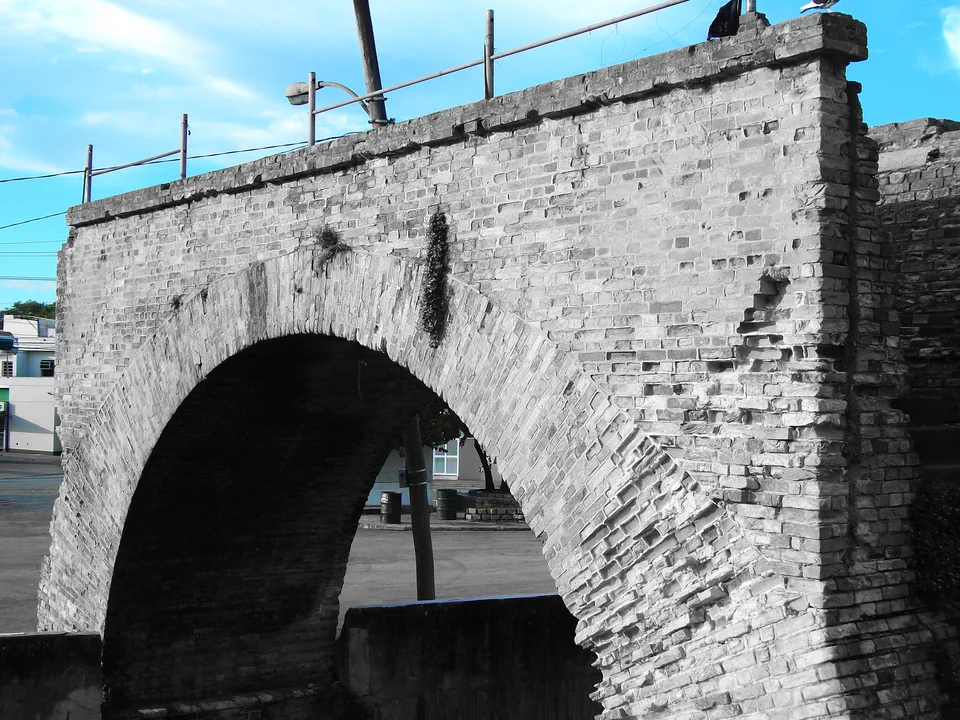
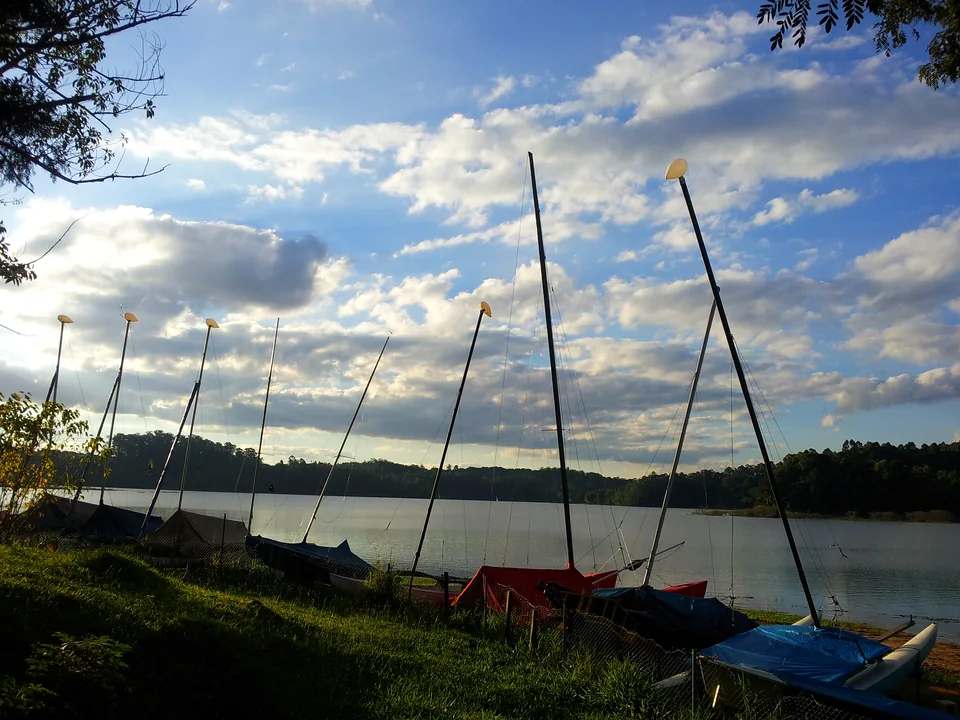
Ponte Torta and the Centro Náutico at Parque da Cidade: photographs by joao batista Shimoto, CC BY-SA 3.0, resized and compressed. Ponte Torta was first uploaded in March 2012; its capture date is unverified. The park photograph dates to May 2012. Enlarged views use the largest reviewed delivered derivatives, not original camera files.
Ponte Torta photograph source · Parque da Cidade photograph source · CC BY-SA 3.0


YOUR SAVED DECISION
Your personal city brief.
A dated snapshot. Refresh it deliberately after changing your preferences or costs.