The appeal
River light, carimbó, local food and repeated encounters in a recognisable village.

LIVING IN BRAZIL ALTER DO CHÃO CITY GUIDE
Build a life around the things that matter to you. Explore a Tapajós river village, discover the everyday commitments behind its beautiful setting, then put a budget around the home and routine you want.
Your priorities come first.
Healthcare, safety, connections to home, the way you spend your days. Start with what matters to you; the budget can follow.A smaller everyday world can be the attraction, if its practical boundaries fit your life.
River light, carimbó, local food and repeated encounters in a recognisable village.
Central lanes, greener streets, lake settings and the road approach create different routines.
Heat, water arrangements, regional care and schooling deserve a concrete household plan.
01 / START WITH YOUR PRIORITIES
Choose what matters to you, or try a starting profile.
No personal details or budget are needed to begin.
These planning flags stay separate from your weighted score. They identify the confirmations your household needs; they do not exclude cities or confirm eligibility.
No health history or personal details needed. An unresolved requirement remains visible in your city result and saved brief.
YOUR PRIORITIES IN CONTEXT
One clear fit score, with its evidence explained.
Explore Alter do Chão and two contrasting alternatives.
ALTER DO CHÃO · YOUR SELECTED PRIORITIES
Method 3.2: Your priorities weight seven dimensions. Climate gradually matches normal monthly temperature and rainfall to the starting preferences or your refinements. Affordability compares city costs until you enter your own monthly limit. Previous saved briefs retain their earlier method and assumptions.
An original assessment by Oliveira Lawyers. We combine multiple public-data families with your priorities and our editorial interpretation. Documented resident accounts add context where reviewed. This is a discovery tool, not an official rating or personal risk forecast.
Safety context combines the disclosed historical2021 Pará state neighbourhood-comfort proxy(80%) with2025 Santarém municipal intentional-homicide plus feminicide victim rates(20%). Neither isolates Alter do Chão; this is not a village comfort poll or armed-robbery grade.
Flood and slope context stays separate from the climate score. Healthcare and services describe provision, not a guarantee about an appointment or address. Housing references describe the supplier’s covered listings; food, household allowances and local tariffs have their own identified dates and limitations. The detailed guide explains what each measure can and cannot tell you.
Read the approach, scope and required credits →02 / CONSIDER THE MONTHLY COSTS
An optional planning tool, when you are ready.
No forms to complete until you choose to begin.
Choose your household, rental area and spending style for a rough monthly estimate. If you want more precision, replace any monthly cost with your own figure. Choose US or international units inside the calculator.
Use our estimate as a starting point, or replace any component with your expected monthly amount. Clear a field to return it to the estimate; enter 0 when that cost does not apply. Custom amounts stay fixed when your household or style changes.
If water is included in condominium charges, set Water and sewer to 0. Replace bus and other transport together to avoid counting the same journeys twice.
Each extra adult or child increases the relevant food, service, transport and personal allowances. Home size also grows unless you enter your own size.
Child food uses an editorial 65% adult-equivalent factor plus extra grocery allowances. This is a rough spending assumption, not a child nutrition standard. Children also receive clothing, travel, care and schooling provisions appropriate to the chosen style.
Health cover, schooling, property charges and lifestyle costs are selected planning allowances, not provider quotes. Practical assumes a public-school pathway with no private tuition; other styles carry a private-school/childcare reserve. Ages, availability and individual needs can change those amounts substantially. The Luxury rental factor models more generous spending; it does not price a specific luxury property.
Keep one-off setup costs separate from the normal month. Enter actual quotes or deliberate zeros; blank stays unknown. These fields do not change the monthly fit grade.
TAKE THE DECISION WITH YOU
Save your priorities, two alternatives, neighborhood shortlist, budget assumptions and unresolved questions in a readable brief. No account or email needed; it stays on this device until you choose to download or print it.
For English-speaking individuals, couples and families considering a move from the United States, Canada, the UK, Australia or Europe.
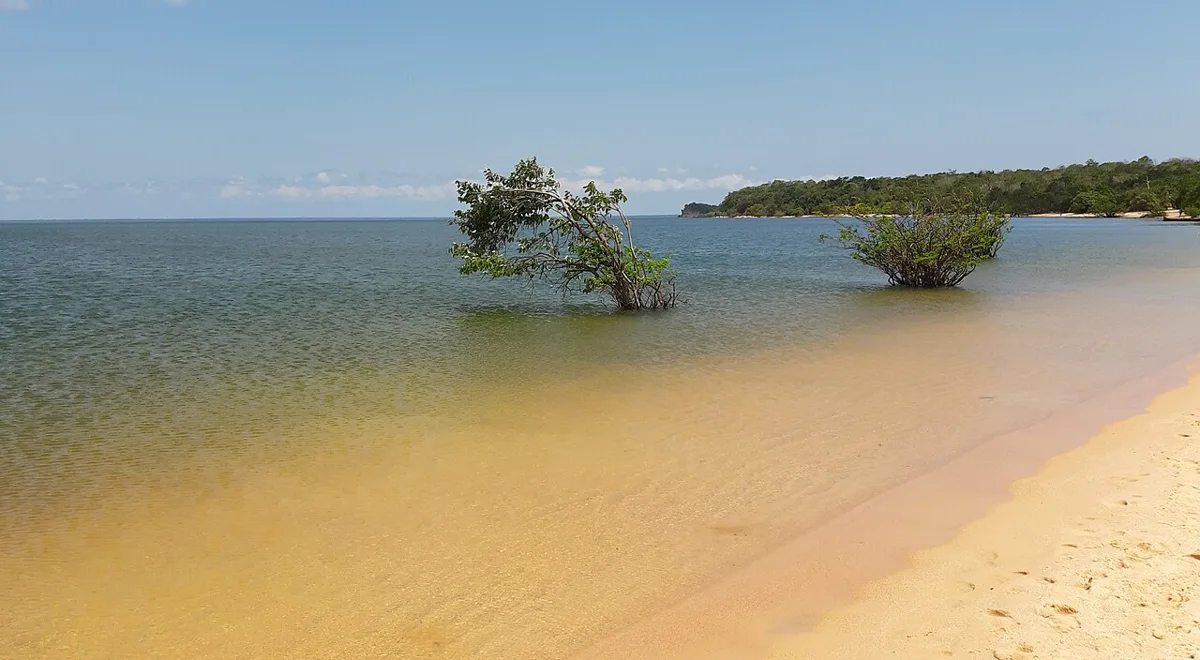
If one picture stays with you, it is pale sand meeting the broad freshwater Tapajós. Alter do Chão is a village within Santarém, not a separate municipality or a small version of Rio. The draw is a repeatable local life: a river outing, a meal with regional ingredients, a familiar square and an evening of music. You may gain a stronger sense of place while giving up the immediate choice of a full-service city.
Compared with Belém, this is a much smaller everyday world with less institutional depth at your door. As an editorial US orientation, think of the attraction of a recognisable place such as Key West—water, food and a distinct local identity—while recognising that Amazonian infrastructure, freshwater seasons and regional travel make the actual living arrangement very different. It is an atmosphere comparison, not a service or climate equivalence.
The strongest fit is deliberate rather than accidental. A couple who enjoys Portuguese, accepts regional appointments and prefers a smaller social setting may feel at home. Someone needing frequent specialist visits, a nearby English-medium school or a deep international professional network should resolve those needs before choosing a house.
A centre-first couple might walk to dinner and small shops, choose river time around the weather and make planned trips to Santarém for larger errands. The home question is less “which beach?” than whether the bedroom, shade, noise and actual walking surface suit an ordinary Tuesday.
A remote-working household might prefer a greener interior lane, a usable workroom and more separation from evening activity. It needs a tested connection, mobile backup, suitable cooling and an honest view of deliveries and power interruptions—not just a speed-test screenshot taken in the pousada reception.
A family with children starts with school, language and care, then chooses a home around the actual repeated journey. A weekend river trip is a benefit; a long compulsory school run is a cost. These routines are editorial examples to help you test a fit, not accounts of invented residents.
Start with a type of week, then investigate a street. The central church and square make the village easy to recognise, but a waterfront frontage, a leafy interior home and a road-side property do not offer the same daily arrangement. More greenery or space can bring a longer hot walk and a greater reliance on transport.
The profiles below keep nine useful starting points in five groups. Expand the places that interest you and select their map references. Ilha do Amor is included as a seasonal outing, not a residential neighbourhood. Lakes and beaches represent landscapes; they do not establish a building entrance, a legal frontage or a district boundary.
| Area and group | Everyday setting | Tradeoff and household fit |
|---|---|---|
| The church and central square Village centre and everyday waterfront | Begin at the church, then test the lane behind the view. Nossa Senhora da Saúde and Praça Sete de Setembro provide an easy orientation for food, small shops and evening activity. Staying nearby can reduce the number of vehicle journeys needed for an ordinary village week. It does not put a regional hospital or a full school choice next door. Listen at the proposed bedroom, look for shade and inspect the route after rain. A central address facing activity and one a little farther back can feel quite different. | Visitor activity and event sound vary by street. Who might investigate: Readers who want walk-to-dinner village life. |
| The CAT and waterfront circuit Village centre and everyday waterfront | This is a working visitor waterfront as well as a view. The Centro de Atendimento ao Turista is a useful named reference near the river edge. Compare the activity of boat departures, restaurants and weekends with the quieter periods you would actually live through. Ask how water level changes the walking route and where deliveries arrive. A holiday launch point is not a promise of permanent beach sand, safe bathing or unrestricted access to a private frontage. | Seasonal water levels and busy departures affect the setting. Who might investigate: Households who enjoy an active waterfront routine. |
| Raimundo Branco and greener interior lanes Greener village interior | Trade immediate activity for a more residential setting deliberately. Rua Raimundo Branco is an actual physical street reference for the greener interior. The appeal can be shade, a garden and less direct exposure to the central visitor circuit, but a longer hot walk changes how a small map feels. Try groceries, a late meal and a rainy return rather than assuming the nearest restaurant is your whole week. Verify the exact utility, drainage and transport arrangements at the chosen home. | Surface, lighting and the effort of errands differ by address. Who might investigate: Readers who prefer greenery over being at the centre of the action. |
| Antônio Agostinho Lobato and village errands Greener village interior | Use an ordinary errand to judge the block. Walk from the proposed home to food shops, a pharmacy and the centre with the things you normally carry. A restaurant-lined lane and a nearby residential frontage can offer different trade-offs despite similar walking distances. For a working household, test the room, connection and afternoon heat. This is an editorial browsing area around a named street, not an official neighbourhood boundary or a blanket recommendation of every property. | The exact block determines sound, shade and service access. Who might investigate: Readers comparing daily convenience with a quieter bedroom. |
| Lago Verde-side streets Lake and river-edge settings | The water-side setting changes across the year. Rua Lago Verde is a physical street reference, not a promise that each home has private water access. Inspect the particular building’s relationship to the shore, drainage, paths and legal boundaries. Ask how supplies and maintenance reach the address during wetter periods and how far you actually travel for errands. A listing’s lake name alone does not establish a lawful deck, safe swimming or an approved extension. | Drainage, shoreline access and river season need a property-level check. Who might investigate: Readers drawn to a lake-side routine with realistic access expectations. |
| Jacundá lake surroundings Lake and river-edge settings | Keep the landscape and the residential address distinct. Lago do Jacundá is the actual water feature shown on the map. Nearby properties may have a different relation to the centre, vegetation, access roads and services than the visitor waterfront. Test the full route and any own-well or wastewater arrangements. Do not infer a neighbourhood boundary, a public entrance or unrestricted shoreline rights from the lake marker. This is a place to investigate with the actual home and its documents in hand. | Homes and practical access vary; the marker represents the lake. Who might investigate: Readers who want to investigate a less central setting. |
| Caranazal and the road-side approach Caranazal and the road approach | Choose the road-side routine for what it solves. The environmental-education school is a named physical reference in the Caranazal approach. The nearby environmental-education setting is part of a different village routine from the central restaurants and boat departures. Compare travel to the village, a full shop, healthcare and your actual child’s school. Check road surface, lighting and drainage around the home, then calculate the trips you would repeat. A greener or larger property may be attractive while making a walk-everywhere village life less realistic. | A home outside the centre creates repeat journeys. Who might investigate: Readers comfortable with deliberate transport planning. |
| Cajueiro river edge Lake and river-edge settings | Picture the outing in more than one season. Praia do Cajueiro is a named river-beach reference in the wider village circuit. A quiet morning, a weekend and a different water level reveal different uses. Choose an actual safe route, current local advice and suitable conditions rather than following a beach map as a guaranteed path. For a home nearby, separately assess the building, access, drainage and lawful residential rights. The landscape is an amenity to understand, not a substitute for services. | Usable sand, water conditions and access change with season. Who might investigate: Readers who value repeat outdoor time near the village. |
| Ilha do Amor: the seasonal sandbar Seasonal sandbar outings | Enjoy the postcard as an outing rather than a residential district. Ilha do Amor is a sandbar whose exposed area depends on the river cycle. Reach it with an appropriate local crossing arrangement and current conditions; do not assume you can always walk over. Boats, currents, stingrays and the changing beach profile deserve attention. The appeal is time beside the freshwater river and a view back to the village. Schools, care and everyday supplies remain on the actual household’s own route. | It is an outing landscape, not permanent housing or year-round exposed sand. Who might investigate: Readers who enjoy river time and accept seasonal change. |
A relaxed village atmosphere is not a robbery statistic. We have not found a comparable Alter-only robbery and theft series that would justify a precise street-crime comparison. Our common score therefore keeps its limits visible: historical Pará state neighbourhood comfort and recent Santarém municipal serious-harm records. Neither describes the probability of something happening on a particular village lane.
In 2025, Santarém recorded 49 intentional-homicide plus feminicide victims, or 13.6 per 100,000 residents. The compatible Pará figure was 20.2 and Brazil 15.5. This gives a useful serious-harm comparison, but it does not establish that a village waterfront is safer than a metropolitan residential district. The 2021 state survey found 62.3% felt safe or very safe in their neighbourhood; it was not an Alter comfort poll.
For an actual home, distinguish a busy central route from a dark, quieter return, and a populated beach from an isolated stretch. Keep your phone and belongings discreet, arrange a reliable late return and ask about the building entrance and local incidents around the specific block. On the water, a competent operator, lifejacket and sensible conditions matter as much as the destination.
There is more here than a holiday first-aid assumption: municipal information published in February 2026 identifies 24-hour primary urgent care in Alter, on Rua Lauro Sodré. That is valuable for an initial assessment. It is not an ICU, a guarantee of every diagnostic service or a replacement for a specialist and hospital plan.
For regional examples, the Hospital Regional do Baixo Amazonas in Santarém provides referral care within the public system. Access to its specialist and hospital services follows the appropriate regulation and referral process. The Unimed Oeste do Pará network provides a private alternative. Its 2025 opening notice distinguishes the new hospital from the urgent/emergency reception at Hospital Unimed Tapajós; confirm the exact receiving facility and your network cover rather than following the newest building name.
Compatible 2023 provision measures put physician working-hour equivalents at 1.56 per 1,000 in Santarém,1.34 in Pará and 2.76 nationally. Non-SUS beds were 27.2 per 100,000, versus 47.9 and 77.7. These are municipal provision indicators, not clinical quality grades. For a prospective resident, continuity of medication, actual specialist availability, language and transport are the practical decisions. Health insurance for foreign citizens is an option to investigate with individual eligibility and network confirmation.
The central village can support a satisfying walk-to-dinner routine. A short distance on a map still has a surface, a temperature and a load to carry. Try the route with groceries, after rain and after an evening out. A shaded interior property may be pleasant while adding repeated trips; a central frontage may save travel while bringing visitor activity closer to the bedroom.
The ordinary district bus provides a connection with Santarém. Resolution 007/2026 sets a R$5.90 whole-line fare, which differs from the urban-city tariff. Special Sairé operations are not evidence of a permanent overnight timetable. Confirm the actual stop and current last service for the week you will travel; a published historic frequency is not a reliable late-arrival plan.
PA-457 is the principal road connection. Airport arrivals, major shopping, care and education can require a vehicle journey beyond the village. We have not established a district-specific pump-price series or a repeat toll charge for the ordinary village-to-Santarém trip, so neither is disguised as a precise local saving. Use actual fuel and transport quotes in your household plan.
Santarém airport is the scheduled gateway; it is not in the village. A published travel guide gives approximately 34 km between the airport and Alter do Chão. Treat that as an orientation, not a door-to-door route promise. Late arrivals deserve a pre-arranged transfer and clear instructions for the actual address.
In the comparable August 2026 ANAC snapshot, Santarém airport had 196 eligible scheduled passenger departures,190 operated and 6 cancelled. Operated services included 96 to Belém and 31 to Brasília. The snapshot records no nonstop service to the US, Canada, UK, Australia or continental Europe. These are actual reported operations in one month, not a current ticket timetable.
Brazilian hubs make the overseas journey possible. Belém and Brasília connect onward to the US and Europe; São Paulo/Guarulhos is another major national long-haul gateway when it fits the itinerary. Compare the full connection, baggage protection, layover and arrival time rather than assuming every Brazilian destination has a direct flight to GRU. For a family visiting home regularly, the extra connection can matter more than the distance to the local runway.
The 1991–2020 NASA regional grid gives an annual average of 81.6°F (27.5°C). March has the coolest monthly mean, 79°F (26.1°C); October the warmest, 86.6°F (30.3°C). Typical daily lows average about76.6°F (24.8°C) in July and typical daily highs about92.9°F (33.8°C) in October. These are long-term regional averages, not record extremes or a forecast.
Cooling and shade belong in the home search. A ventilation path, roof exposure, afternoon sun and a workable sleep temperature may change your comfort more than a small difference in the annual mean. Unlike a southern Brazilian city with a cooler winter, Alter stays warm throughout the year. The preference controls let you judge that heat against what you actually enjoy.
Rain averages are highest in March, about13.4 in (339.1 mm), and lowest in September, about1.4 in (34.5 mm). River height also depends on the wider basin and timing, so the local rainiest month is not a complete river-level calendar. Exposed sand generally grows in the lower-water part of the year; the exact beach and access vary. Drought, smoke and exceptional river conditions need current advice beyond these normals.
For a compatible regional comparison, the same NASA 1991–2020 series gives Belém an average near80.4°F (26.9°C), versus81.6°F (27.5°C) here; its October mean is83.6°F (28.7°C), versus86.6°F (30.3°C). Both are warm, but the inland lower-rain period can feel different. These averages do not include a personal humidity or heat-index assessment.
Smoke deserves its own practical check. A municipal October 2026 alert reinforces precautions during regional fire and smoke episodes. This matters for outdoor routines and a household with respiratory needs; the weather-preference score is not a current air-quality reading.
Freshwater does not mean still water or automatic safe bathing. The Tapajós is broad; boat wakes, waves, current and weather can make a crossing or outing more demanding than the postcard suggests. Use a suitable operator, lifejacket and local conditions rather than a generic “easy for everyone” promise.
Ilha do Amor is a seasonal sandbar facing the village. Enjoy a river-beach afternoon, a meal or a view back towards the church, while allowing for changing sand and an appropriate crossing. Do not assume you can always wade over. Stingrays and other local bathing hazards warrant current practical advice; clear-looking water alone establishes neither potability nor swimming quality.
Lago Verde offers a different water-side landscape, including canoe and nature outings when conditions suit. Shores, paths and exposed areas change. For a permanent home, separately check drainage, legal setbacks, sanitation and whether access remains workable through the seasons. A photographed beach is not evidence that a parcel is lawful or flood-free.
Ask how the actual house works. Santarém’s 2024 total-population indicators show 44.93% served by the reported water network and 3.28% by sewer collection. These are municipality-wide measurements, not a map of Alter connections, water quality or the percentage of wastewater treated.
The village has a mixture of public-network work, community systems and private supply arrangements. A December 2025 community report describes improved water access in União after years of rationing; a February 2026 state notice still described phases of the wider supply project. A new-work headline therefore cannot certify the chosen house’s service.
For a home, establish the supply source, storage, potable-water testing, pressure and payment responsibility. Inspect the wastewater arrangement and maintenance access as carefully as the kitchen. Our calculator uses a clearly labelled editable water/wastewater reserve because we have not verified a single ordinary tariff applicable to every village arrangement. Replace it with the real bill and any shared charges.
For a remote worker, test the connection inside the room where you will work, at the hours you normally call clients. Ask for the actual provider, technology and outage history, then test mobile backup on your own device. A successful stay in one pousada says little about the reliability of another street or a leafy interior house.
Anatel recorded 45,582 fixed-broadband contracts across Santarém in December 2025, about 12.6 per 100 residents. That is useful infrastructure context, not an Alter coverage map, a speed guarantee or a count of connected people. Local power, router backup, heat and acoustic privacy can be just as consequential as the advertised download number.
Santarém’s professional and learning institutions add depth to the wider region, but a village address does not put every meeting or course within walking distance. Be realistic about a regional-city day, courier delivery and any need for uninterrupted power. The quiet setting works best when the operational plan works too.
Repeat the ordinary pleasures. A familiar meal, river light, the square and an evening of carimbó can be more valuable to a resident than a packed list of attractions. Leave room for routines and relationships rather than treating the village as a permanent excursion schedule.
Central food and small shops support a limited local week. A larger shop, specialist purchase, some banking tasks and a broader service choice may take you to Santarém. Before committing, try a whole grocery run, laundry, a delivery and the return with bags. Ask which conveniences are genuinely year-round and which reflect a busy visitor period.
Portuguese makes ordinary life more independent. English can help in parts of the visitor economy, but an English-speaking waiter or a tourism course does not establish a city-wide service language. If your household needs English for medicine, school or legal decisions, arrange that specifically rather than relying on a holiday impression.
For a regional indoor-shopping example, Rio Tapajós Shopping in Santarém brings shops, food and cinema into one stop. It can help combine errands on a city day; it is not a village amenity you should assume is a short walk from home.
Alter has a living Borari and river-community identity, not simply an interchangeable beach-village aesthetic. The Sairé celebration, religious traditions, local music, food and community work shape the place. Learn the context, ask before photographing people and use local operators and community arrangements respectfully.
Belonging may grow through repeated encounters and participation rather than a ready-made expat circuit. A 2021 interview with Betânia Spangemberg, who moved from Rio roughly a decade earlier, describes putting down roots through food and local tradition. It is an individual account, not proof that every newcomer experiences easy integration.
Large events also change sound, traffic and accommodation demand. A home that feels quiet on an ordinary weekday may have a different relationship to Sairé or a holiday weekend. Choose the address with both the appeal and the busy moments in mind.
Start with the actual child’s year group and language needs. The municipal Sagrado Coração de Jesus school is a real local reference. A 2026 proposal to extend provision is a proposal, not confirmation that every requested year group has opened. Local indigenous and environmental-education settings have distinct roles; they are not interchangeable international schools.
For a regional bilingual example, Peixinho Feliz in Santarém describes bilingual education and extended-day options. Ask about the exact age group, timetable, English use, admissions and the daily journey from your home. A second regional example, Colégio Santa Clara, describes daily English within its bilingual programme from age four. That is a specific programme claim, not a promise that all subjects use English. We have not established a local English-medium international school in Alter, and a bilingual label alone does not establish international accreditation.
Adults can explore UFOPA in Santarém, including its language and degree ecosystem. A Portuguese/English Letters degree is not evidence that unrelated degrees are taught in English. The Wakará project announced a 2026 tourism-English cohort; that shows local language activity, not an always-open course for every newcomer. Confirm eligibility and current dates before building a study plan around it.
The 2022 Census counted 936 foreign nationals among 331,942 Santarém residents, about 0.28%, compared with roughly 0.39% nationally. That is the whole municipality. It neither counts people in Alter nor identifies US, Canadian, British or other English-speaking residents.
Foreign visitors, Brazilian newcomers and long-term foreign residents are different populations. Academic work sometimes uses “estrangeiro” to describe someone from outside the local community, including Brazilians; it must not be turned into an expat nationality statistic. We have not found a defensible local English-speaker total or nationality breakdown to publish.
What helps a prospective newcomer is more concrete: the language of a medical appointment, a workable school, a way to meet people and a local routine that does not depend on a tourist season. Test those relationships directly while using the regional numbers as modest context.
The accounts show attachment, alongside practical gaps. Roseneide, a long-time União resident, and Lília Maria, known as Vera, describe the difference a community water project made after years of difficult supply. Their December 2025 accounts are about that neighbourhood project, not proof of reliable water throughout Alter. The NGO publishing the story had a direct role in the work.
Betânia Spangemberg’s 2021 interview gives a different view: moving from Rio and building a food business rooted in local traditions. It captures the attraction of a distinctive place and the work of belonging; its age and business perspective matter. Borari participants Osmar Vieira and Elinaldo Santos, interviewed in 2025, describe cultural continuity while drought changes the materials and river conditions behind Sairé.
Other residents welcome new infrastructure and formal property documentation, while Maria do Socorro’s January 2026 account describes waiting and crowded buses. We reviewed identified accounts across independent publisher families and kept contrary experiences. These are individual perspectives, not a representative satisfaction poll, and they do not replace crime or service measurements.
Regional fish, cassava-based food, fruit and local preparations are part of the appeal. Eating well in a river village does not automatically mean that a foreign household’s preferred groceries are inexpensive or locally available. A restaurant visit, a basic basket and a complete home shop measure different things.
Our basic-food starting point is Belém’s September 2026 adult basket: R$731.62. It is an explicit capital proxy, not an Alter price survey and not a complete nutrition or grocery budget. The calculator adds common household assumptions and lets you replace them; imported foods, alcohol, special diets and a particular restaurant routine can change the result.
Before choosing a home, buy an ordinary week’s ingredients, including the things you do not want to give up. Compare the village shop with the cost and effort of a regional-city trip. This is more useful than an unqualified claim that “the Amazon is cheap.”
Do not rely on an old guide’s ATM promise. A June 2024 municipal notice challenged the proposed removal of the village’s only Banco24Horas terminal. We have not confirmed today’s operating machine. Arrange usable cards, Pix where available and a sensible cash plan before an outing rather than assuming the old terminal is still there.
The default is an example, not a target you were expected to set. It begins with two adults, no children and Comfortable spending. Our named housing starting point is a Duda AlterVille one-suite apartment advertised at $893 (R$4,500) per month. Its floor area, included fees and minimum lease term are unpublished, so the whole-home quote stays fixed when you change an illustrative home size.
One apartment is not a village rental index. We do not turn it into a purchase price per square foot, a representative rental median or a promise that a larger family can rent the same home. Replace it with the actual home, condominium, property-tax and other charges you expect. The comparison is therefore a limited-cost illustration against a common benchmark.
The calculator automatically allows for additional adults and children and offers Practical, Comfortable and Luxury spending assumptions. Open the monthly budget to change the household or override each cost component. School, healthcare, insurance and leisure allowances remain planning reserves unless replaced by your own quotes.
A holiday booking can help you experience the village, but holiday, monthly and annual terms are different products. Confirm the minimum stay, furnishing inventory, cooling, power, water, internet, cleaning and responsibility for repairs. Ask whether condominium and property-tax charges are included rather than inferring it from a headline price.
The contract should identify the actual property, authorised landlord, deposit or guarantee, permitted use and termination terms. Check who can lawfully let the home and whether access is usable throughout the seasons. A very attractive frontage does not settle those questions.
For one possible guarantee route, rental guarantee insurance in Brazil may be worth investigating. Availability depends on underwriting and landlord acceptance; it is not a guarantee that a foreign applicant will qualify.
Identify what is actually being sold before discussing the view. A registered ownership interest, possessory rights and an informal promise to regularise are materially different. Obtain the current matrícula and relevant certificates where they exist, identify the seller’s authority and check whether the transaction can transfer the rights you expect.
A May 2026 municipal regularisation event delivered documentation to 62 families in Alter. That is a useful sign of ongoing work, not proof that all village properties are registered or that a specific seller will receive a title. Review the individual record, plot, approvals and any pending process rather than relying on a neighbourhood label.
Riverfront, environmental, public-land and indigenous-territory questions require parcel-specific review. A deck, access lane or building extension may involve rights beyond the house itself. For rural property, foreign-acquisition rules administered by Incra can create additional issues. Preliminary property review can help identify the questions before a deposit; full purchase support addresses the wider transaction.
It is worth making room for the river, forest and communities around Alter. A memorable outing is not automatically a practical residential base. Ponta de Pedras and Carapanari are wider Santarém references, not extensions of the central square. Pindobal is in neighbouring Belterra; it should not be presented as an Alter neighbourhood.
Floresta Nacional do Tapajós and its community visits involve their own access, permissions and local arrangements. Choose an appropriate community-led or authorised outing, agree what is included and account for conditions and physical effort. The municipal guide advises local guidance for the Serra da Piraoca route, whose final ascent is steeper than the riverside setting might suggest.
For a prospective resident, use these trips to understand the region without filling the entire trial stay with excursions. Leave enough ordinary days to learn how the household actually works.
Separate the right to stay, the right to buy and the tax consequences. They are related planning questions, but owning a property does not automatically create residence status. A visitor’s banking experience also does not establish what every nonresident or new resident can do.
Plan documents, language support, funds, contract timing and the period you will need in temporary accommodation. Review immigration options and the tax consequences of establishing yourself in Brazil before moving assets or changing your ordinary living arrangements. For new developments, off-plan property support should begin with the actual project and approvals, not an assumed investment return.
Local agents and operators can help you discover homes and daily arrangements. Independent legal work remains a distinct role: checking the rights, documents, risks and contract for your particular decision.
For further legal explanations, explore Oliveira Lawyers live-session recordings and our topic playlists. They complement individual advice and do not establish a fixed future broadcast schedule.
Give yourself an ordinary week rather than only a holiday itinerary. Repeat the school, groceries, work and care journey you would actually need. Spend time inside the proposed house in afternoon heat and rain, test the connection during work hours and hear the street after dinner.
Where feasible, see a different river season or ask for dated evidence of access and drainage at the actual property. Compare the central village with a greener interior address instead of assuming that a larger garden changes nothing else. Discuss the whole household’s comfort, not only the person most excited by the move.
Use your saved brief to record priorities, the alternative cities, a shortlist and unresolved questions. A good fit is not a perfect score: it is a life whose attractions and compromises you understand well enough to choose.
Evidence and context
Our assessment combines multiple public-data families, local context and editorial interpretation. Dates and geographical limits remain visible.
Photography: Just a Brazilian man, CC BY 2.0; Richard N Horne, CC BY-SA 4.0. Each enlarged image retains its original source, author and licence. Resizing is the only visual change. Map data ©OpenStreetMap contributors.
YOUR SAVED DECISION
A dated snapshot. Refresh it deliberately after changing your preferences or costs.